Indianer, die großen Unbekannten
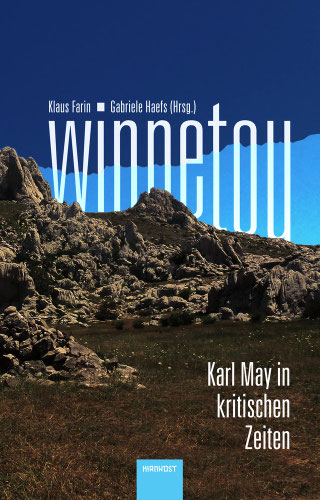
Sechs Autoren plädieren für „Winnetou. Karl May in kritischen Zeiten“
Scroll down for English version
Da kochen Emotionen auf mehreren Seiten schon mal hoch: Kulturelle Aneignung! Siegerarroganz! Entwürdigung indigener Völker! Soll man Karl Mays „Winnetou“-Bücher heute noch lesen? War sein edler Apachenhäuptling nichts als ein von christlich-weißer Fantasie geschaffenes Konstrukt, waren Karl Mays Indianer nur eine Utopie als Gegenwelt zur eigenen, in der man sich nicht mehr wiederfand?
Sechs Autoren haben in einem Sammelband eine Klarstellung im Zeitalter woker Verbissenheit versucht, aber das Unternehmen ist allzu heterogen ausgefallen, als dass die Grundlinie einer Verständigung gezogen worden wäre. Zwei Autoren – Kunstpädagoge Andreas Brenne und Publizist Klaus Farin - stellen die Winnetou-Romane als herausragende Beispiele optimal recherchierter Unterhaltungsliteratur heraus, geschrieben von einem Autor, der sich zutiefst mit seinen ungewöhnlichen Figuren identifizierte und stets für deren Rechte in der Realität einstand. Für illegale kulturelle Aneignung gibt es da kaum eine Grundlage.
Zwei weitere Autoren – die Karl-May-Forscher Gunnar Sperveslage und Johannes Zeilinger – verlassen Karl Mays Indianer-Ebene und widmen sich seinen fiktiven orientalischen Reiseromanen, und da das Problem kultureller Aneignung in Bezug auf die Kulturen afrikanischer und islamischer Länder ja gänzlich anders liegt, sollten sie aus der Diskussion eigentlich ausgenommen werden. Herausgeberin Gabriele Haefs gar ist als Nordistin und Übersetzerin skandinavischer Sprachen noch weiter von Indianern entfernt, auch wenn sie das abenteuerliche Narrativ erwähnt, die Mandan-Indianer (verwandt mit der Sioux-Sprachfamilie), seien aus Wales oder Island nach Nordamerika eingewandert.
Fast gänzlich auf Karl May verzichtet jedoch Ethnologe Christian Feest, Autor zahlreicher Publikationen über die indigenen Nationen Nordamerikas. Sein Beitrag liest sich wie eine haarsträubende historische Anekdotensammlung über die Wahrnehmung von Europäern bezüglich der fremden „Wilden“ – und eine fundamentale Fremdheit setzt sich ja bis heute fort, eine Fremdheit, die tiefere Ursachen hat als die grauenvolle, fünfhundertjährige Unterwerfung. Wenn man als weißer Leser Feests Beitrag verinnerlicht, möchte man sich am liebsten aus Scham hinter einer Mauer verstecken, um die niederschmetternde Kontinuität der Miss- und Halbverständnisse, des millionenfachen weißen Fehlverhaltens, der heuchlerischen Missionierungsversuche und der hochstaplerischen Nachahmungen zu vergessen.
Und was einen grundsätzlich an diesem Buch wundert, ist die Tatsache, dass indigene Autoren selber zwar einige Male kurz zitiert, aber offenbar nie zu eigenen Beiträgen eingeladen wurden. Warum fragt niemand die Leute selber, was sie über Winnetou als deutsche Idealfigur eines „Nobel Savage“ denken? Was sie über das spezielle Verhältnis der Deutschen zu „Indianern“ denken? Was dabei wohl heraus käme?
Höchst wahrscheinlich eine Vielfalt einander für- und widersprechender Stimmen. Die kolonialen Verletzungen sind existenziell und werden in Jahrhunderten nicht vergessen, Karl May hin oder her. Die „Indianer“ lehnen die Begriffe „Native Americans“ oder „Indigenous Peoples“ eigentlich alle ab und möchten als Nationen benannt werden so wie die Europäer als Italiener, Ungarn oder Deutsche. Die „Indianer“ wissen zugleich, dass die Weißen ihnen nicht nur Land, Kultur, Sprache, Ethik geraubt haben – sondern dass es auch Weiße waren und sind, die etwas von den verschwundenen Werten bewahren können. Was wüssten wir von Black Elks Großer Vision ohne die Aufzeichnung John Neihardts? Was von Charles Eastman, ohne dass er das Trauma einer weißen Schule durchgemacht und dass seine weiße Frau (wie angemessen auch immer) seine Texte redigiert hätte? Was von dem Lakota-Schamanen John Fire Lame Deer ohne Richard Erdoes?
Als Weißer, der Indianern zugetan ist und sich für sie einsetzen möchte, gibt es dennoch keinen Grund zu übertriebenem Selbstbewusstsein. Denn die Frage, was man als Weißer denn imstande ist zu verstehen von den „Anderen“, ist gar nicht zu beantworten. Man kann sich nur selber sagen, dass man nicht gänzlich weiß, was man da versteht, weil man in eine andere Person nicht hineinschlüpfen kann. Es muss einem Weißen zu denken geben, dass in John Neihardts Black-Elk-Aufzeichnungen just die Passagen am intensivsten und überzeugendsten wirken, die im wörtlichen Transkript nicht enthalten sind, die der große Seher also nicht gesagt hat.
Andererseits: was ist es denn, was Weiße - und vielleicht vor allem Deutsche, auch den Autor Karl May – an „Indianern“ faszinierte? Was wir als tiefe, vielleicht doch in uns selbst verankerte Wahrheit empfinden, tatsächlich als Gegenbild zu der zerfallenden weißen Zivilisation? Ist der finnische Historiker Pekka Hämäläinen einer Suggestion zum Opfer gefallen, wenn er die Lakota-Spiritualität als einzigartig empfindet? Sind indigene Selbstäußerungen wie die von Chief Dan George über die Notwendigkeit der Liebe oder großer Schriftsteller wie Joseph Marshall III über das Geschenk des Schweigens, wie die von Leslie Marmon Silko oder Scott Momaday über die Kraft von Mythen und Zeremonien – sind sie Täuschungen, denen wir auf den Leim gehen? Oder sind sie die letzten Wahrheiten, die der Menschheit noch zur Verfügung stehen?
Ich kenne die Bibliothek von Karl May nicht, ich weiß nicht, welche Autoren ihm Ethik und Spiritualität von „Indianern“ nahegebracht haben und wie zuverlässig sie waren. Aber viele seiner Äußerungen deuten trotz seiner Qualität als bloßer Unterhaltungsautor darauf hin, dass er verstanden hat, was wir verstehen sollten: Dass diese andere, die Gegenwelt einmal existiert hat und dass sie immer noch latent da ist in indigenen Menschen. Dass sie begonnen haben, sich zu erinnern an sich selbst. Dass die Widerständigkeit von AIM (American Indian Movement) nicht auf die sechziger, siebziger Jahre beschränkt war. Dass indigene Menschen Wege finden werden, ihre Werte von neuem zu verankern in einer anderen Welt, aber dass es nicht hilfreich ist, sich als Weiße da hineinzumogeln, sei es durch Esoterik oder durch Kostümfeste. War es Tommy Orange, der meinte, letztlich sei es egal, ob ein Indianer sich in der Prärie oder auf dem Asphalt einer Metropole befände? Schließlich sei die Erde ja nicht weg. Indigene stellen nur noch zwei Prozent der amerikanischen Bevölkerung, aber: „We are still there“ – Europäer jedoch sollten nur zuhören und respektieren, was sie vielleicht nie ganz verstehen, ganz gleich, wie nah sie sich den "Anderen" manchmal auch fühlen.
Herausgeber Klaus Farin und Gabriele Haefs: „Winnetou. Karl May in kritischen Zeiten“, mit einer Einführung von Klaus Farin, mit Beiträgen von Christian Feest, Andreas Brenne, Johannes Zeilinger, Gunnar Sperveslage und einem Nachwort von Gabriele Haefs, Verlag Hirnkost, Berlin 2025, 231 S., zahlreiche Abbildungen, ISBN 978-3-98857-045-1
3. Dezember 2025 Copyright Christel Heybrock
Native Americans: The Great Unknowns
Six authors make the case for *Winnetou: Karl May in Critical Times*
To my Indigenous readers:
Karl May (1842–1912) is the best-known German author to write about—among other subjects—the Native Americans of North America – even though he was never there. Through the fictional characters of a white trapper (Old Shatterhand) and a noble Apache chief (Winnetou), he reached an audience of millions; he is still read today. The image Germans hold of Native Americans stems primarily from his adventure novels and has never really been revised in the public consciousness.
Emotions often run high on this issue: accusations of cultural appropriation, the arrogance of the victor, and the dehumanization of Indigenous peoples. Should Karl May’s *Winnetou* books still be read today? Was his noble Apache chief merely a construct born of white Christian fantasy? Were May’s Native Americans simply a utopian counter-world to a reality in which he no longer felt at home?
Six authors have attempted to provide some clarity in this age of "woke" dogmatism through an anthology, yet the resulting work is too disjointed to establish a common ground for understanding. Two of the authors—art educator Andreas Brenne and writer Klaus Farin—highlight the *Winnetou* novels as outstanding examples of meticulously researched popular fiction, penned by an author who deeply identified with his extraordinary characters and consistently championed their real-world rights. There is little basis here for claims of illicit cultural appropriation.
Two other authors—Karl May scholars Gunnar Sperveslage and Johannes Zeilinger—move beyond Karl May’s Native American settings to focus on his fictional travel novels set in the Orient; since the issue of cultural appropriation plays out quite differently regarding the cultures of African and Islamic nations, they ought really to be excluded from this particular discussion. Editor Gabriele Haefs—a specialist in Scandinavian studies and a translator of Nordic languages—is even further removed from the subject of Native Americans, even though she does mention the adventurous narrative claiming that the Mandan people (linguistically related to the Sioux family) migrated to North America from Wales or Iceland. Ethnologist Christian Feest, author of numerous publications on the Indigenous nations of North America, dispenses with Karl May almost entirely. His contribution reads like a hair-raising collection of historical anecdotes regarding European perceptions of the exotic "savage"—and that fundamental sense of otherness persists to this day, stemming from causes far deeper than the horrific five-hundred-year history of subjugation. Upon internalizing Feest’s essay, a white reader might well wish to hide behind a wall for shame, desperate to forget the crushing continuity of misconceptions and half-truths, the millions of instances of white misconduct, the hypocritical attempts at evangelization, and the fraudulent imitations.
What is truly surprising about this book is the fact that, while Indigenous authors are briefly quoted a few times, they were apparently never invited to contribute essays of their own. Why does no one ask the people themselves what they think of Winnetou as the German ideal of the "Noble Savage"? Or what they think of the Germans' peculiar relationship with "Indians"? What sort of answers might emerge? In all likelihood, a multitude of voices—some in agreement, others in conflict. The wounds inflicted by colonialism are existential and will not be forgotten for centuries—Karl May notwithstanding. The "Indians" actually reject terms like "Native Americans" or "Indigenous Peoples"; they wish to be identified as nations, just as Europeans are identified as Italians, Hungarians, or Germans. At the same time, they recognize that while white people stripped them of their land, culture, language, and ethics, it was—and is—white people who are also capable of preserving some of those lost values. What would we know of Black Elk’s Great Vision without John Neihardt’s record? What of Charles Eastman, had he not endured the trauma of a white school and had his white wife not edited his texts (however appropriately or otherwise)? What of the Lakota shaman John Fire Lame Deer without Richard Erdoes?
Yet, for a white person who feels an affinity for Native Americans and wishes to advocate for them, there is no cause for overconfidence. After all, the question of what a white person is truly capable of understanding about "the Other" is one that cannot be answered. One can only acknowledge that one does not fully grasp what one understands, simply because it is impossible to step inside another person’s skin. It should give a white person pause for thought that, in John Neihardt’s records of Black Elk, the passages that resonate most intensely and convincingly are precisely those absent from the verbatim transcript—which the great visionary did not say, after all.
On the other hand: what was it that fascinated white people—and perhaps Germans in particular, including the author Karl May—about "Native Americans"? What is it that we perceive as a profound truth, perhaps one anchored within ourselves—acting, in fact, as a counter-image to a crumbling white civilization? Did the Finnish historian Pekka Hämäläinen fall prey to an illusion when he perceived Lakota spirituality as unique? Are indigenous expressions—such as Chief Dan George’s words on the necessity of love, or those of great writers like Joseph Marshall III on the gift of silence, or Leslie Marmon Silko and Scott Momaday on the power of myths and ceremonies—are these deceptions we have been taken in by? Or are they the ultimate truths still available to humanity?
I am unfamiliar with Karl May’s library; I do not know which authors introduced him to the ethics and spirituality of Native Americans, or how reliable those sources were. Yet, despite his status as a mere writer of popular fiction, many of his statements suggest he grasped what we ought to understand: that this other realm—this counter-world—once existed and remains latent within indigenous people. That they have begun to remember who they are. That the spirit of resistance embodied by AIM (the American Indian Movement) was not confined to the 1960s and 70s. That indigenous people will find ways to re-anchor their values in a different world—but that it does not help for white people to try to insinuate themselves into that space, whether through esotericism or costume parties. Was it Tommy Orange who suggested that, ultimately, it makes no difference whether a Native American is on the prairie or on the asphalt of a metropolis? After all, the earth itself hasn't disappeared. Indigenous people make up only two percent of the American population, yet: "We are still there"—Europeans, however, should simply listen to and respect what they may never fully understand, no matter how close they sometimes feel to the "Other."
Editors Klaus Farin and Gabriele Haefs: *Winnetou. Karl May in Critical Times* (*Winnetou. Karl May in kritischen Zeiten*), with an introduction by Klaus Farin, contributions by Christian Feest, Andreas Brenne, Johannes Zeilinger, and Gunnar Sperveslage, and an afterword by Gabriele Haefs; Hirnkost Verlag, Berlin 2025, 231 pages, numerous illustrations, ISBN 978-3-98857-045-1
December 3, 2025 Copyright Christel Heybrock
Translation by Google