Indigene Mentalität, weißen Lesern erklärt
Charles Eastmans Schrift “The Soul of the Indian”
Scroll down each chapter for English version
Als Europäer im 19. Jahrhundert rücksichtslos in immer größeren Massen den nordamerikanischen Kontinent überschwemmten, stießen sie auf eine indigene Kultur, die ihnen wesensfremd war, aber sie hielten es nicht für angebracht, sich damit auseinander zu setzen – ein Versäumnis, das sich bis in die Gegenwart auswirkt. Es war einfacher, sich mit christlicher Missionierung, blutiger Brutalität und zynisch gebrochenen Verträgen über alles hinwegzusetzen, was der Vereinnahmung entgegenstand.
Die ihnen eigene mentale und intellektuelle Offenheit führte dazu, dass sich viele Indigene nicht nur unterm Druck der Anpassung, sondern aus eigenem Antrieb der weißen Zivilisation und dem Christentum näherten, was freilich nicht zu einer Stabilisierung ihrer Lebensverhältnisse führte. Charles Eastman (1858-1939), Santee-Sioux, Arzt, Publizist, Sozialpolitiker, ging wie manche andere seiner Zeitgenossen davon aus, Indianer müssten sich den Weißen nur besser verständlich machen, um gleichberechtigt neben ihnen existieren zu können, und dabei war er bereit, auch Kompromisse zu machen. Der erste und für ihn schwierigste war wohl der, seinem zum Christentum übergetretenen Vater den Wunsch zu erfüllen, weiße Schulen zu besuchen und zu lernen, was die „Zivilisation“ zu bieten hatte.
Eastman = Ohíyesa scheint die Ausbildung zwar Überwindung, aber keine Entpersönlichung gekostet zu haben; das nicht selten tödliche Drama der Kinder, die zwangsweise ihren Familien entrissen und in christliche Schulen gesteckt wurden, hat er nicht kennen gelernt. Wie aus seinen autobiographischen Schriften hervorgeht, scheint er bei weißen Kontaktpersonen meist auf wohlwollende Menschen gestoßen zu sein, die ihn förderten. Dass er 1891 auch noch die weiße Lehrerin und Publizistin Elaine Goodale heiratete, scheint seine Integration zunächst perfekt gemacht zu haben. Goodale sprach fließend Dakota, sie war Superintendent of Indian Education for the Two Dakotas, sie schrieb seit ihrer Kindheit und stärkte Eastman den Rücken bei seinen eigenen Schriften. Und wohl mehr als das - sie redigierte seine Texte und drängte sicherlich darauf, indianische Standpunkte möglichst einem christlichen Publikum anzunähern. Dass sie nachdrücklich die Ansicht vertrat, die Indigenen müssten sich in die dominante weiße Zivilisation integrieren, dürfte Eastman allmählich in Distanz gebracht haben, die Ehe ging 1921 auseinander.
Aber der Versuch, indianisches Denken einer christlich-weißen Leserschaft zu vermitteln, war der Antrieb zu Eastmans Schrift „The Soul of the Indian“, die 1911 erschien. Als heutiger Leser wird man nicht ganz froh damit; Eastmans Versuch, vor allem Ähnlichkeiten herauszuarbeiten zwischen indianischer und einer urchristlichen Religion ist von historischer Bedeutung, kann aber heute nicht mehr überzeugen.
The Indigenous Mindset, Explained to White Readers
Charles Eastman’s Writings: “The Soul of the Indian”
As Europeans ruthlessly flooded the North American continent in ever-increasing numbers during the 19th century, they encountered an indigenous culture that was fundamentally alien to them; yet, they did not deem it appropriate to engage with it—a failure that continues to have repercussions to this day. It was simpler to use Christian proselytization, bloody brutality, and cynically broken treaties to simply override anything that stood in the way of their appropriation of the land.
Their inherent mental and intellectual openness led many indigenous people to gravitate toward white civilization and Christianity—not merely under the pressure to assimilate, but of their own volition—though this, of course, did not result in any stabilization of their living conditions. Charles Eastman (1858–1939)—a Santee Sioux, physician, writer, and social reformer—assumed, like many of his contemporaries, that Native Americans simply needed to make themselves better understood by white people in order to coexist with them on equal terms; in pursuing this goal, he was prepared to make compromises. The first such compromise—and likely the most difficult for him personally—was fulfilling his father’s wish to attend white schools and learn what “civilization” had to offer, particularly after his father had converted to Christianity.
For Eastman—also known as Ohíyesa—this education appears to have required a certain degree of personal resolve, yet it did not result in a loss of his sense of self; he never experienced the often-fatal tragedy endured by those children who were forcibly torn from their families and confined in Christian boarding schools. As is evident from his autobiographical writings, he appears to have encountered mostly benevolent white individuals who encouraged and supported him in his endeavors. The fact that, in 1891, he also married Elaine Goodale—a white teacher and writer—seems to have initially cemented his integration. Goodale was fluent in Dakota; she served as the Superintendent of Indian Education for the Two Dakotas; she had been writing since childhood; and she provided steadfast support for Eastman in his own literary endeavors. And likely more than that—she edited his texts and almost certainly pressed for the presentation of Native American perspectives in a manner that would resonate with a Christian audience. However, her emphatic conviction that Indigenous peoples ought to integrate into the dominant white civilization likely caused Eastman to gradually distance himself; the marriage ultimately ended in separation in 1921.
Nevertheless, the endeavor to convey Native American thought to a white, Christian readership served as the driving force behind Eastman’s work *The Soul of the Indian*, published in 1911. As a contemporary reader, one finds it somewhat unsatisfying; while Eastman’s attempt—primarily focused on highlighting similarities between Native American spirituality and early Christian religion—holds historical significance, it no longer carries the power to persuade today.
Translation by Google
Kapitel 1 "The Great Mystery"
Eastmans Schrift ist in sechs Kapitel gegliedert, die alle indigenen Lebensbereiche abdecken – eine Gliederung, die weißer Systematik entgegenkommt, aber im Grunde nicht über eine Absicht hinausreicht, denn indianischer Mentalität entspricht nicht die Trennung nach Sachgebieten, sondern die Verbindung und Durchdringung aller Lebensaspekte. Immerhin beginnt Eastman mit dem schwierigsten und umfassendstenden Aspekt, dem „Great Mystery“. Das Kapitel soll dem weißen Leser vermitteln, wie tief religiös die angeblich „wilden“ oder „heidnischen“ Indianer tatsächlich seien. Eastman versucht zu erklären, dass Indianer weder Kirchenbauten noch heilige Schriften brauchen, um zu beten und sich „Gott“ nah zu fühlen – der gemäß indianischem Denken überall in der Natur anwesend sei, so dass man ihm jeweils allein und in schweigender Konzentration entgegentrete.
Ob Schweigen als Basis indianischer Persönlichkeitsbildung damals tatsächlich für Weiße verständlich war, darf man bezweifeln. Die verständigsten weißen Leser ordneten die Bindung an die Erscheinungen der Natur ein in „Romantik“ und „pantheistische Naturreligion“, Begriffe, die noch im Nachwort der deutschsprachigen Ausgabe von 2009 eine Rolle spielen. Der fundamentale Gegensatz zwischen der personalisierten weißen Gottesvorstellung eines fordernd liebenden Herrschers einerseits und dem allgegenwärtigen Mysterium einer vitalen, allen Lebewesen immanenten Schöpfung andererseits hätte in seiner Konsequenz von Eastman gar nicht formuliert werden können, da es ihm auf Ähnlichkeit der Kulturen, nicht auf Unvereinbarkeit ankam.
Immerhin bringt er deutlich zur Sprache, dass und warum seine Mitbrüder die Geldgier, Heuchelei und Verlogenheit der Christen verachteten und sich ihnen moralisch überlegen fühlten – aber die alltäglichen verabscheuungswürdigen Verhaltensweisen seien ja mit dem wahren Geist des Christentums nicht vereinbar, und der sei der indianischen Auffassung sehr ähnlich.
Man stolpert im ersten Kapitel auch über ein rätselhaftes Detail, das oder den „bambeday“ oder auch „hambeday“ – das Wort ist offenbar nicht englisch. Erst eine KI-Anfrage bringt es in die Nähe der Visionssuche, auf Lakota „hambléceya“, „hanbléwaceya“, das Erflehen einer Vision. Da Eastman ein DAkota, kein LAkota war, können Begriffe leicht verändert auftreten, und die "day"-Endung ist nichts anderes als die geläufige betonte é-Endung: hambedé. Bei Bambeday scheint es sich um ein Missverständnis des Druckers in einigen Editionen zu handeln.
Chapter 1: "The Great Mystery"
Eastman’s work is structured into six chapters, covering every sphere of indigenous life—an arrangement that accommodates the conventions of Western classification but, fundamentally, serves no purpose beyond mere organizational intent; for the indigenous mindset does not conceive of life as compartmentalized into distinct subject areas, but rather as a unity in which all aspects of existence are interconnected and mutually permeable. Significantly, Eastman begins with the most challenging and all-encompassing aspect: the "Great Mystery." This chapter aims to convey to the white reader just how deeply religious the supposedly "savage" or "pagan" Indians actually are. Eastman attempts to explain that Indians require neither church buildings nor sacred texts to pray and feel close to "God"—a deity who, in the indigenous worldview, is omnipresent throughout nature, and whom one therefore encounters in solitude and in silent contemplation.
One may well doubt whether silence—posited as the foundation of indigenous character formation—was, at the time, truly comprehensible to white audiences. Even the most perceptive white readers tended to categorize this deep bond with the natural world as mere "Romanticism" or "pantheistic nature religion"—concepts that, notably, still figure in the afterword of the 2009 German edition. The fundamental dichotomy—between the personalized Western conception of God as a demanding yet loving sovereign on the one hand, and the omnipresent mystery of a vital Creation immanent in all living beings on the other hand—could not, in its full implications, have been explicitly articulated by Eastman himself; for his objective was to highlight the similarities between cultures, not their irreconcilable differences.
Nevertheless, he clearly articulates *that*—and *why*—his fellow tribesmen despised the avarice, hypocrisy, and duplicity of Christians, and felt themselves to be morally superior to them; yet he maintains that these reprehensible everyday behaviors are, in fact, incompatible with the true spirit of Christianity—a spirit which, he suggests, bears a striking resemblance to the indigenous worldview.
In the first chapter, one also stumbles upon an enigmatic detail—the "bambeday" or "hambeday"—a word that is evidently not English. It is only through an AI query that a connection is established to the vision quest—known in Lakota as *hambléceya* or *hanbléwaceya*—the supplication for a vision. As Eastman was a DAkota (not LAkota), words may change slightly, and the “day”-ending means nothing else than the wellknown é-ending (hambedé). ”Bambeday” seems to be a misunderstanding of the printer in some of the editions.
Translation by Google
Kapitel 2 "The Family Altar“
Das Kapitel setzt die Informationen über indianische Religiosität fort, zeigt es doch, wie das Bewusstsein der Schöpfung als eines sakralen Geschehens noch die geringsten Alltagsverrichtungen steuert und durchdringt, und dass die weiße Praxis, das religiös Erhabene von profaner Banalität zu trennen, völlig unindianisch ist – es gibt für die indianische Mentalität weder Erhabenes noch Profanes, sondern nur die sinnerfüllte, lebensspendende Beziehung von Sonne und Erde und den Rhythmus von Tag und Nacht, Sommer und Winter, Geburt und Tod. Diese Beziehung von Mensch und kosmischen Rhythmen ist bei Indigenen so tief und von so intimer Wahrnehmung, dass sie praktisch schon mit der Zeugung beginnt. Die werdende Mutter zieht sich zur Geburt ohne Beistand in die Einsamkeit zurück, um ihre Aufgabe zu erfüllen, und sie ist es auch, die das Kind bis zum Alter von sechs Jahren erzieht und es die Grundlagen der Spiritualität und des Verhaltens lehrt.
Ohíyesa beschreibt die Rolle der Frau als maßgeblich für die Stabilität der Familie, des Clans und letztlich des Stammes, aber wie sehr die matriarchale Prägung bestimmend für ein ganzes Volk war, führt er nicht aus, womöglich, weil es ihm selbst nicht bewusst war. Russell Means jedoch, der rund 100 Jahre später einen ähnlichen Versuch machte, der weißen Gesellschaft die indianische zu erklären, sah im Gegensatz zwischen der patriarchalen weißen Sozialstruktur und der matriarchalen indigenen die Hauptursache für die grundsätzliche Unvereinbarkeit der Kulturen. Means argumentiert auch von einem ganz anderen, selbstbewussten Standpunkt aus und bietet keinerlei Kompromisse an.
Dabei könnte Ohíyesas Beschreibung des Alltagslebens und der wesensbestimmenden Bescheidenheit der Frau bei weißen Lesern den Eindruck erwecken, sie sei dem Mann „untertan“, aber solche Herrschaftsstrukturen spiele(t) en in der indigenen Gesellschaft keine Rolle, sah sich doch auch der Mann nicht als Herrscher: „In the life of the Indian there was only one inevitable duty,—the duty of prayer—the daily recognition of the Unseen and Eternal. His daily devotions were more necessary to him than daily food.” Und das Gebet, mit dem der Sonnenaufgang begrüßt wurde, war eine stumme Wahrnehmung der Natur mit erhobenen Armen, allein. „Every act of his life is, in a very real sense, a religious act. He recognizes the spirit in all creation, and believes that he draws from it spiritual power.”
Chapter 2: "The Family Altar"
This chapter continues the exploration of Native American spirituality, demonstrating how the awareness of Creation as a sacred event guides and permeates even the most trivial daily activities. It reveals that the white practice of separating the religiously sublime from the profanely banal is entirely alien to the Native American worldview; for the Native American mentality, there exists neither the sublime nor the profane—only the meaningful, life-giving relationship between Sun and Earth, and the rhythms of day and night, summer and winter, birth and death. This relationship between human beings and cosmic rhythms is so profound among indigenous peoples—and perceived with such intimacy—that it effectively begins at the very moment of conception. When the time comes to give birth, the expectant mother withdraws into solitude, without assistance, to fulfill her task; it is she, too, who raises the child until the age of six, imparting the foundations of spirituality and proper conduct.
Ohíyesa describes the role of women as pivotal to the stability of the family, the clan, and ultimately the tribe; however, he does not fully elaborate on the extent to which this matriarchal orientation served as a defining force for the entire people—perhaps because he himself was not fully conscious of it. Russell Means, on the other hand—who, some one hundred years later, undertook a similar endeavor to explain Native American society to the white world—identified the contrast between the patriarchal social structure of white society and the matriarchal structure of indigenous society as the primary cause of the fundamental incompatibility between the two cultures. Moreover, Means argues from a vastly different—and self-assured—perspective, offering absolutely no room for compromise.
In this context, Ohíyesa’s description of daily life—and of the modesty that was so intrinsic to the nature of women—might lead white readers to believe that she was “subservient” to men; yet such power structures played no role in indigenous society, for men, too, did not view themselves as rulers: “In the life of the Indian there was only one inevitable duty,—the duty of prayer—the daily recognition of the Unseen and Eternal. His daily devotions were more necessary to him than daily food.” And the prayer with which the sunrise was greeted was a silent communion with nature—performed alone, with arms raised. “Every act of his life is, in a very real sense, a religious act. He recognizes the spirit in all creation, and believes that he draws from it spiritual power.”
Translation by Google
Kapitel 3 "Ceremonial and Symbolic Worship”
Auch das dritte Kapitel dehnt den Blick auf das von Religiosität bestimmte indigene Leben weiter aus, nun aber hinsichtlich der Veränderungen durch die weiße Kolonisation. Die religiösen Riten (im Grunde sollte man von spirituellen Riten sprechen) seien erst in der kolonialen Übergangszeit ausgeprägt worden, unterm Einfluss von Handelskontakten, katholischen und protestantischen Missionaren, unter Alkohol und dem Druck der gewalttätigen Landnahme. Es gebe keine Informationen über die Ausübung von Spiritualität vorm Auftreten der Weißen – was den Leser verwundert angesichts der Tatsache, dass Geschichten und Mythen über Generationen hinweg tradiert wurden und Ohíyesa die Verbindung von Vergangenheit und Gegenwart durch seine eigene Großmutter erlebte.
Aber er widmet sich zunächst der zentralen Sioux-Zeremonie, dem Sonnentanz, den er eingehend beschreibt und dessen zunehmende physische Härte er als Reaktion auf den Druck der weißen Gesellschaft zurückführt. Es gibt verschiedene Interpretationen, was mit dem Sonnentanz ausgedrückt werden soll, der die Tänzer an ihre physische Grenze bringt durch körperlichen Schmerz und tagelangen Nahrungsentzug – ist es ein Ritual von Tod und Wiedergeburt? Ein durch Gelübde versprochenes Selbstopfer für Wakan Tanka, das Great Mystery, weil Indianer bewusst keine materiellen Reichtümer haben, die sie opfern können? Oder ist es, wie Russell Means erklärt, ein Versuch, es den Frauen gleichzutun, die beim Gebären ihr Blut und Leben riskieren? Wie dem auch sei – die Selbstverletzungen seien, so Ohíyesa, infolge der Kolonisation immer grausamer und extremer geworden, und überhaupt habe der Kontakt mit den Weißen die indigenen Gesellschaften ihrer ruhigen Selbstgewissheit beraubt und sie immer barbarischer gemacht: „It is noteworthy that the first effect of contact with the whites was an increase of cruelty and barbarity… In this manner the Sun Dance of the Plains Indians, the most important of their public ceremonials, was abused and perverted until it became a horrible exhibition of barbarism…”
Aber auch der weniger bekannte, weil weniger öffentlich durchgeführte „Great Medicine Dance“ wird thematisiert, eine Art Einführungsritual von neuen Schamanen in die „Great Medicine Lodge“, eine Verbindung, die auf die Algonquin zurück gehe und den Auswirkungen der weißen Zivilisation zeitweise wie ein Bollwerk habe standhalten können. Ohíyesa, der erste als Arzt zugelassene Indigene überhaupt, referiert die symbolbeladene, an Tod und Wiedergeburt erinnernde Initiation spiritueller Heiler in einer Textpassage, die zu den eindringlichsten und seltensten Informationen über diese Thematik gehört, wenngleich er moniert, dass weiße Praktiken wie Predigt und öffentlich gesprochene Gebete das Ritual durchdringen würden. „But at a later period it became still further demoralized and fell under suspicion of witchcraft.”
Ohíyesa sieht sich gezwungen zu erklären, dass Indigene alles als „medicine“ bezeichnen, was zur Stabilisierung in schwierigen Lebenssituationen beiträgt, also außer Heilkräutern auch die Magie von Trommeln, Musik und Tanz – eine Heilkunst mit beachtlichen Erfolgen, wie er betont, wobei die spirituelle Autorität der Heiler sogar eine „primitive Psychotherapie“ darstelle. Scharlatanerie sei erst entstanden, als nach weißem Vorbild die Heiler entlohnt wurden, so dass sich Trickster und Gauner als Schamanen ausgaben.
Zwei weitere wichtige Zeremonien sind der reinigende Gebrauch des Inipi, der Schwitzhütte, die Ohíyesa auf eine Legende zurückführt, und der sakralen Pfeife, der canunpa, die den vier Himmelsrichtungen zugewandt wird – deren Ursprungsmythos durch die weiße Büffelkalbfrau wird aber nicht erwähnt. Wahrscheinlich wäre der Vorgang christlichen Lesern als zu "heidnisch" erschienen.
Chapter 3: "Ceremonial and Symbolic Worship"
The third chapter further expands the scope of the inquiry into indigenous life—a life defined by religiosity—though it now focuses on the changes wrought by white colonization. The religious rites (or, more accurately, what should be termed *spiritual* rites) are said to have taken their distinct form only during the transitional colonial era—shaped by the influence of trade contacts, Catholic and Protestant missionaries, alcohol, and the pressure of violent land appropriation. The text claims that no information exists regarding the practice of spirituality prior to the arrival of white people—a claim that puzzles the reader, given the fact that stories and myths were handed down through generations, and that Ohíyesa himself experienced this continuity between past and present through his own grandmother.
However, he first turns his attention to the central Sioux ceremony: the Sun Dance. He describes this ritual in great detail, attributing its increasing physical severity to the pressures exerted by white society. There are various interpretations regarding the intended meaning of the Sun Dance—a ritual that pushes dancers to their physical limits through bodily pain and days of fasting. Is it a ritual of death and rebirth? Is it an act of self-sacrifice vowed to *Wakan Tanka*—the Great Mystery—undertaken because Native Americans, by conscious choice, possess no material wealth to offer as a sacrifice? Or is it, as Russell Means suggests, an attempt to emulate women, who risk their very blood and lives in the act of giving birth? Be that as it may—according to Ohíyesa, acts of self-mutilation became increasingly cruel and extreme as a result of colonization; indeed, contact with white people generally stripped indigenous societies of their quiet self-assurance and rendered them ever more barbaric: “It is noteworthy that the first effect of contact with the whites was an increase of cruelty and barbarity… In this manner the Sun Dance of the Plains Indians, the most important of their public ceremonials, was abused and perverted until it became a horrible exhibition of barbarism…”
However, attention is also paid to the lesser-known—because less publicly performed—"Great Medicine Dance," a type of initiation ritual for new shamans entering the "Great Medicine Lodge." This was an association tracing its roots back to the Algonquin people, which, for a time, reportedly served as a bulwark against the encroachments of white civilization. Ohíyesa—the very first indigenous person to be licensed as a physician—describes this highly symbolic initiation of spiritual healers—an event evocative of death and rebirth—in a passage that ranks among the most vivid and rare accounts available on this subject, even as he laments that white practices, such as preaching and public prayer, had begun to infiltrate the ritual. “But at a later period it became still further demoralized and fell under suspicion of witchcraft.”
Ohíyesa feels compelled to explain that indigenous people designate anything that contributes to stability in difficult life situations as "medicine"—encompassing not only medicinal herbs but also the magic inherent in drumming, music, and dance. This constitutes a healing art with remarkable successes, as he emphasizes, wherein the spiritual authority of the healers effectively amounts to a form of "primitive psychotherapy." Charlatanism, he argues, emerged only when healers began to be remunerated—following the white model—thereby allowing tricksters and swindlers to pass themselves off as shamans.
Two other important ceremonies are the purifying use of the *Inipi*—the sweat lodge, which Ohíyesa traces back to a legend—and that of the sacred pipe, the *canunpa*, which is turned toward the four cardinal directions; however, its origin myth involving the White Buffalo Calf Woman is not mentioned. This story would probably have appeared too "pagan" to Christian readers.
Translation by Google
Kapitel 4 "Barbarism and the Moral Code"
Das vierte Kapitel widmet Eastman der indianischen Ethik und ihrer unleugbaren Überlegenheit über das unsägliche Normalverhalten der Weißen, das aus einer antispirituellen, materialistischen Grundhaltung resultiert. Das Erste, was er als Kind erfahren habe, sei das Wesen ethischen Verhaltens gewesen: „I perceived what goodness is. I saw and loved what is really beautiful… As a child, I understood how to give; I have forgotten that grace since I became civilized. I lived the natural life, whereas I now live the artificial.”
Die tiefgreifendste Zerstörung indianischer Mentalität war die Zerstörung ihrer Ethik und die Abstrahierung des Lebendigen, die Distanz von der Natur als einem umfassenden Lebensraum. Jeder Stein, jeder Baum sei früher Gegenstand seiner Verehrung gewesen, schreibt Ohíyesa, heute stehe er mit weißen Kunstkennern vor einem Landschaftsgemälde und taxiere dessen Dollar-Wert. Die Hingabe an die Natur und das Bewusstsein, selbst ihr Teil zu sein, habe den Indianer stolz und demütig zugleich gemacht: „The first American mingled with his pride a singular humility. Spiritual arrogance was foreign to his nature and teaching.”
Hier muss man einschieben, dass bereits der Begriff „Natur“ indianischem Denken unangemessen ist, bezeichnet er doch einen Gegensatz zur menschlichen Zivilisation und damit zwei einander fremde Bereiche der Realität. In traditionellem indianischem Denken existiert diese Spaltung nicht. Die Grundverschiedenheit weißer Zivilisation und indianischer Kultur prägt sogar die Fundamente des Alltags, beispielsweise die Auffassung von Sprache. Indigene, erfüllt von tradierten Mythen und eigenen Erfahrungen, sind natural born storytellers – Geschichtenerzähler von Geburt. Aber das kostbare Gut Sprache basiert zutiefst auf dem Schweigen, auf dem Verzicht von Ver-laut-barungen und auf der Fähigkeit, stumme Mitteilungen wahrzunehmen, die Sprache der Bäume, des Windes, der Flüsse…
Der rohe Umgang von Weißen mit Sprache irritiert Indianer bis heute, Russell Means bezweifelt sogar die ethische Berechtigung von Schrift, weil sie das Lügen begünstige. Ohíyesa: “He (der Indianer) never claimed that the power of articulate speech was proof of superiority over the dumb creation; on the other hand, it is to him a perilous gift. He believes profoundly in silence—the sign of a perfect equilibrium. Silence is the absolute poise or balance of body, mind, and spirit.” Und als Quintessenz: “Silence is the cornerstone of character."
Der Disziplin in Bezug auf Sprache entspricht die Disziplin in Bezug auf den eigenen Körper, dem Verzicht und Härte zugemutet werden. Ohíyesas Verständnis indigener Männlichkeit – denn den physischen Aspekt von Moral bezieht er natürlicherweise auf den männlichen Körper - scheint in der aktuellen Szene des neuen weißen Männlichkeitsbewusstseins nicht nur Vorbild, sondern die reinste Anleitung zu maskulinem Verhalten zu sein, definiert Ohíyesa doch die physische und mentale Pflege des Körpers als Fundament indianischer Moral. Der Indianer “was required to fast from time to time for short periods, and to work off his superfluous energy by means of hard running, swimming, and the vapor-bath. The bodily fatigue thus induced, especially when coupled with a reduced diet, is a reliable cure for undue sexual desires.”
Solche Textpassagen dürften in der patriarchalen Gesellschaft des frühen 20. Jahrhunderts auf große Zustimmung gestoßen sein. Auch dass indianische Familien Kinder in diesem Sinn erzogen hätten durch ständige Kontrollgegenwart von Eltern, Verwandten und Freunden, wird Missionaren und Kirchenvertretern gefallen haben. Die Kinder selbst, deren Fortschritte sich quasi in der Öffentlichkeit des Stammes abspielten, scheinen sich allerdings nicht eingeengt gefühlt zu haben, waren sie doch meist, wie Ohíyesa ausführt, eifrig bestrebt, es den Erwachsenen gleichzutun.
Strenge Moral forderte auch den Mädchen Bescheidenheit, Zurückhaltung und Jungfräulichkeit ab, was durch das Gemeinschafts-Ritual des „Jungfrauen-Festes“ garantiert wurde. Aber was weißen Lesern wie patriarchales Besitzdenken anmuten kann – jungfräuliche Reinheit und Keuschheit vor der Ehe (Ohíyesa benutzt tatsächlich die Begriffe purity und chastity) – betraf ebenso die jungen Männer, die sich in ihrem Stamm beweisen sollten, bevor sie heiraten konnten. Persönliches Besitzdenken war Indianern fremd und ist es weithin bis heute. Sinn der scheinbar verklemmten Keuschheitspraxis war sicherlich der Erhalt sozialer Ordnung und die Erziehung junger Leute zur Verantwortung für den Stamm, für dessen Überleben auch später persönliche Bedürfnisse geopfert werden mussten. Die grundsätzliche Opferbereitschaft des „Give away“ erstreckte sich, wie man in Ohíyesas Kindheitsautobiographie „Indian Boyhood“ nachlesen kann, sogar auf die Opferung seines Hundes. Ein Beispiel, dessen Härte weiße Leser wohl abgeschreckt hätte, in „The Soul of the Indian“ wird es nicht erwähnt.
„It was our belief that the love of possessions is a weakness to be overcome. Its appeal is to the material part, and if allowed its way it will in time disturb the spiritual balance of the man. Therefore the child must early learn the beauty of generosity. He is taught to give what he prizes most…”
Und das galt auch im Erwachsenenleben, Familien sollten generös auftreten mit Festen und Freigebigkeit. Dass aber dennoch Freude an kleinen Besitztümern herrschte wie an bestickten Mokassins, Schmuck und Kleidung aus Hirschleder – es ist eine Erfahrungstatsache, die von Ohíyesa nicht erwähnt wird und die von anderen indigenen Nationen, etwa den Navajo, auch anders praktiziert wurde als von den Plains-Stämmen. Während indigene Autoren stets betonen, es habe wegen der bewusst mangelnden Besitztümer keine Diebe gegeben, weiß Ohíeyesa mit Wamanon sogar ein Wort dafür, räumt aber ein, dass Pferdediebstahl als Kavaliersdelikt oder Geschicklichkeitsleistung betrachtet wurde.
Auch der Besitz von Kriegsbeute – der nicht bedeutend gewesen sein kann - war nicht ehrenrührig, und ohnehin spielten sich Kriegshandlungen weit weniger brutal ab, bevor die Weißen kamen und gnadenlos töteten aus purer Eroberungsgier. Dieses Verhalten, mit dem bereits die spanische Expedition unter Fernando de Soto 1538 in den Kontinent einfiel, war unter indigenen Nationen nicht nur unbekannt, sondern wurde und wird mit Abscheu gesehen. Bei allen Streitigkeiten zwischen indigenen Nationen, die oft um Lebensräume kämpften, war die Eroberung von Land als gewaltsame Inbesitznahme jenseits indigener Vorstellung. Das Land gehörte sich selbst als Teil des Lebewesens Erde = Unci Maká und konnte nicht in Besitz genommen werden.
Die Praxis der Skalpname wird von Ohíyesa entschärft und heruntergespielt – es habe sich ursprünglich nur um ein kleines Stück Kopfhaut gehandelt, das dem getöteten Feind vom Kriegshäuptling entnommen worden und nur im Monat der Siegesfeier getragen worden sei, um später rituell beerdigt zu werden. Dass der Kriegsbrauch wahrscheinlich überhaupt weißen Ursprungs war und welche barbarischen Auswüchse er im Zuge der Kolonisierung erreichte, wird nicht erwähnt. Einem besiegten Feind den Skalp zu nehmen, galt als ebenso gerechtfertigt, wie einen Feind zu töten.
Nicht zu rechtfertigen war jedoch das Verbrechen einer Lüge. „Damit sich das Übel nicht weiter ausbreite“, sei der Lügner wegen der Vertrauenstäuschung getötet worden. Ohíyesa führt nicht weiter aus, welche lebensbedrohlichen Folgen eine Lüge nicht nur für den Belogenen haben konnte, sondern für den ganzen Stamm. In der prekären, stets bedrohten Situation einer halbnomadischen Existenz muss jeder sich auf seine Mitmenschen verlassen können. Vermutlich war Eastman durch seine Vermittlerrolle schon so mit der „zivilisierten“ Gesellschaft verbunden, dass er es nicht mehr für angebracht hielt, die Lebensbedingungen seiner Vorfahren einer weißen Gesellschaft zu schildern.
Dafür erwähnt er mit durchaus stolzer Betonung den auch von feindseligen Weißen niemals bezweifelten indianischen Mut und führt als Beispiel Crow Dog an, der 1881 den Brulé-Lakota-Häuptling Spotted Tail erschossen hatte, weil der mithilfe des Militärs zum Häuptling geworden war (und sich auch sonst sehr unehrenhaft verhalten hatte). Wegen des Attentats wurde Crow Dog zum Tode verurteilt, was er unbeirrt akzeptierte. Er stellte sich den Behörden, obwohl es Fluchtmöglichkeiten gab. Das heldenhafte Verhalten führte zur Revision des Urteils und zur Freisprechung: Crow Dog starb erst dreißig Jahre später 1911, im Erscheinungsjahr von Ohíyesas Schrift.
Chapter 4: "Barbarism and the Moral Code"
In the fourth chapter, Eastman devotes his attention to Native American ethics and their undeniable superiority over the unspeakable standard behavior of white people—behavior that stems from a fundamentally anti-spiritual, materialistic mindset. The very first thing he learned as a child, he writes, was the essence of ethical conduct: “I perceived what goodness is. I saw and loved what is really beautiful… As a child, I understood how to give; I have forgotten that grace since I became civilized. I lived the natural life, whereas I now live the artificial.”
The most profound destruction inflicted upon the Native American mentality was the destruction of its ethics and the abstraction of the living world—the distancing of oneself from nature as an all-encompassing living space. Every stone, every tree, was once an object of his reverence, Ohíyesa writes; today, however, he stands alongside white art connoisseurs before a landscape painting, appraising its dollar value. This devotion to nature—and the awareness of being an integral part of it—rendered the Native American both proud and humble at the same time: “The first American mingled with his pride a singular humility. Spiritual arrogance was foreign to his nature and teaching.”
Here, one must interject that the very concept of "nature" is ill-suited to Native American thought, for it implies a dichotomy—an opposition to human civilization—and thus designates two mutually alien spheres of reality. In traditional Native American thought, this division simply does not exist. The fundamental divergence between white civilization and Native American culture permeates even the very foundations of daily life—for instance, in their respective conceptions of language. Indigenous people—steeped in ancestral myths and their own lived experiences—are "natural-born storytellers." Yet language—that precious commodity—is deeply rooted in silence, in the deliberate restraint from vocalization, and in the capacity to perceive silent messages: the language of trees, of the wind, of rivers...
The coarse manner in which white people handle language continues to baffle Native Americans to this day; Russell Means even questions the ethical legitimacy of written language, arguing that it facilitates deception. Ohíyesa writes: “He (the Indian) never claimed that the power of articulate speech was proof of superiority over the dumb creation; on the other hand, it is to him a perilous gift. He believes profoundly in silence—the sign of a perfect equilibrium. Silence is the absolute poise or balance of body, mind, and spirit.” And, as a quintessence: “Silence is the cornerstone of character.”
The discipline applied to language is mirrored by a discipline regarding one’s own body—a body upon which self-denial and physical rigor are imposed. Ohíyesa’s conception of indigenous masculinity—for he naturally frames the physical dimension of morality in terms of the male body—appears, within the contemporary landscape of the "new white masculinity," to serve not merely as a model, but as the purest possible manual for masculine conduct; indeed, Ohíyesa defines the physical and mental cultivation of the body as the very bedrock of Native American morality. The Native American “was required to fast from time to time for short periods, and to work off his superfluous energy by means of hard running, swimming, and the vapor-bath. The bodily fatigue thus induced, especially when coupled with a reduced diet, is a reliable cure for undue sexual desires.”
Such passages likely met with widespread approval within the patriarchal society of the early 20th century. Furthermore, the notion that Native American families raised their children in this manner—under the constant, watchful presence of parents, relatives, and friends—would undoubtedly have appealed to missionaries and church representatives alike. The children themselves—whose progress unfolded, as it were, in the public sphere of the tribe—do not, however, appear to have felt constrained; for, as Ohíyesa explains, they were generally eager to emulate the adults.
A strict moral code also demanded modesty, reserve, and virginity from girls—standards that were upheld through the communal ritual of the "Maidens' Festival." Yet what might strike white readers as a form of patriarchal possessiveness—namely, virginal purity and chastity prior to marriage (Ohíyesa actually employs the terms *purity* and *chastity*)—applied equally to young men, who were expected to prove themselves within their tribe before they could marry. The concept of personal possessiveness was alien to Native Americans—and, to a large extent, remains so to this day. The purpose behind this seemingly rigid practice of chastity was undoubtedly the preservation of social order and the instilling of a sense of responsibility toward the tribe in young people—a responsibility that would later require them to sacrifice their own personal needs for the sake of the tribe's survival. As one can read in Ohíyesa’s childhood autobiography, *Indian Boyhood*, this fundamental spirit of self-sacrifice—epitomized by the "Give-away" tradition—extended even to the sacrifice of his own dog. It is an example whose severity would likely have repelled white readers—and indeed, in *The Soul of the Indian*, it is not mentioned.
“It was our belief that the love of possessions is a weakness to be overcome. Its appeal is to the material, and if allowed to go its way, it will in time disturb the spiritual balance of the person. Therefore, the child must learn early the beauty of generosity. He is taught to give what he prizes most…”
And this also applied to adulthood; families were expected to be generous with celebrations and displays of generosity. However, the fact that there was still joy in small possessions, such as embroidered moccasins, jewelry, and deerskin clothing—this is an experiential fact not mentioned by Ohíeyesa and was practiced differently by other Indigenous nations, such as the Navajo, than by the Plains tribes. While Indigenous authors consistently emphasize that there were no thieves because of the deliberate lack of possessions, Ohíeyesa even has a word for them, Wamanon, but concedes that horse theft was considered a minor offense or a display of skill.
Even the possession of war booty—which could not have been significant—was not considered dishonorable, and in any case, warfare was far less brutal before the arrival of the Europeans, who killed mercilessly out of sheer lust for conquest. This behavior, which the Spanish expedition under Fernando de Soto had already employed when invading the continent in 1538, was not only unknown to indigenous nations but was, and still is, viewed with abhorrence. Despite all the disputes between indigenous nations, who often fought over territory, the conquest of land as a violent appropriation was beyond the indigenous comprehension. The land belonged to them as part of the living entity Earth = Unci Maká and could not be taken.
The practice of scalp naming is downplayed and trivialized by Ohíyesa—it was originally just a small piece of scalp taken from the slain enemy by the war chief and worn only during the month of the victory celebration, before being ritually buried. The fact that the customs of war were likely of white origin and the barbaric excesses they reached during colonization are not mentioned. Scalping a defeated enemy was considered just as justified as killing an enemy.
However, the crime of lying was not justifiable. "So that the evil would not spread further," the liar was killed for betraying trust. Ohíyesa does not elaborate on the life-threatening consequences a lie could have not only for the person lied to, but for the entire tribe. In the precarious, constantly threatened situation of a semi-nomadic existence, everyone had to be able to rely on their fellow human beings. Presumably, Eastman, through his role as intermediary, was already so connected to "civilized" society that he no longer considered it appropriate to describe the living conditions of his ancestors to a white audience.
He emphasizes, with considerable pride, the Native American courage that even hostile white people never doubted, citing as an example Crow Dog, who in 1881 shot and killed the Brulé Lakota chief Spotted Tail because the latter had become chief with the help of the military (and had otherwise behaved very dishonorably). Crow Dog was sentenced to death for the assassination, a sentence he accepted without hesitation. He surrendered to the authorities, despite having opportunities to escape. This heroic act led to a review of the verdict and his acquittal: Crow Dog did not die until thirty years later, in 1911, the year Ohíyesa's book was published.
Translation by Google
Kapitel 5 "The Unwritten Scriptures"
Das fünfte Kapitel widmet sich dem Problem, dass religiöse Schriften bei indigenen Völkern keine Schriften waren, sondern mündlich tradierte Mythen aus “history, poetry, and prophecy, of precept and folk-lore”, ähnlich zusammengesetzt wie die Bestandteile der Bibel, wie Eastman betont. Dem ersten Menschen sei keine Frau aus der Rippe geschnitten worden, sondern er habe sich aus einem Splitter im großen Zeh einen Bruder geschaffen, Little Boy Man. Und es habe kein mehrdeutiges Apfelessen gegeben, sondern anstelle der listigen Schlange die trickreiche Spinne Unk-to-mee, von der die Tiere gegen Little Boy Man aufgehetzt wurden: Er würde sie eines Tages alle beherrschen, wenn sie ihn nicht töten würden. Die Tiere wurden schließlich zu Feinden des Little Boy Man, mussten sich aber ergeben und geloben, ewig den Menschen als Nahrung zu dienen.
Eastman konstatiert, dass es bei Indianern weder Teufel noch Hölle gegeben habe, bevor die Weißen kamen. Aber: “Here we have, it appears, the elements of the story in Genesis; the primal Eden, the tempter in animal form, and the bringing of sorrow and death upon earth through the elemental sins of envy and jealousy.”
Wie er zu diesem Schluss kommt, bleibt angesichts der doch ziemlich anderen Geschichte sein Geheimnis, aber nachdem Little Boy Man die Tiere „unterworfen“ hatte – offenbar musste die Verbindung geschaffen werden zum biblischen Auftrag, sich die Welt untertan zu machen – fand Little Boy Man letztlich auch eine Frau, eine von mehreren, die aus der Tierwelt zu kommen und dahin zurückzugehen schienen. Die indianischen Mythen spinnen sich wie von selbst immer weiter und kommen nie zu einem rationalen Ende. Sie manifestieren sich aber unter anderem in Spirit Animals und Clan-Symbolen und wirken bis heute identitätsstiftend. Zum Ende des Kapitels entgleitet dem Autor das sich spiralig windende, von irisierenden Bedeutungen durchwebte Geschehen, und er gibt den Vergleich mit der Genesis auf. Es ist, als würden die Mythen wie Ranken über Eastmans Versuch wuchern, sie für christliche Leser zurückzuschneiden.
Chapter 5: "The Unwritten Scriptures"
The fifth chapter addresses the fact that, for indigenous peoples, religious scriptures were not written texts but rather orally transmitted myths—composed of "history, poetry, and prophecy, of precept and folk-lore"—structured similarly to the constituent elements of the Bible, as Eastman points out. According to these myths, the first human was not created with a woman fashioned from his rib; instead, he created a brother for himself—Little Boy Man—from a splinter in his big toe. Furthermore, there was no ambiguous incident involving the eating of an apple; instead of the cunning serpent, there was the wily spider Unk-to-mee, who incited the animals against Little Boy Man by warning them that he would one day rule over them all unless they killed him. The animals ultimately became Little Boy Man’s enemies, yet they were eventually forced to surrender and vow to serve humans as a source of sustenance forever.
Eastman observes that, prior to the arrival of white settlers, Native Americans possessed neither a concept of the Devil nor of Hell. However, he notes: "Here we have, it appears, the elements of the story in Genesis: the primal Eden, the tempter in animal form, and the bringing of sorrow and death upon earth through the elemental sins of envy and jealousy."
How he arrives at this conclusion—given that the actual story is quite different—remains his secret; yet, after Little Boy Man had "subdued" the animals—a narrative link apparently established to parallel the biblical mandate to "have dominion" over the world—he eventually found a wife. She was one of several such women who appeared to emerge from the animal realm only to return to it again. These Native American myths seem to spin themselves out endlessly, never reaching a strictly rational conclusion. Nevertheless, they manifest themselves—among other ways—in the form of spirit animals and clan symbols, and continue to serve as a vital source of identity to this day. By the end of the chapter, the spiraling narrative—woven through with iridescent layers of meaning—seems to slip from the author’s grasp, and he ultimately abandons the comparison with the Book of Genesis. It is as if the myths were sprawling like vines over Eastman’s attempt to prune them back for Christian readers.
Translation by Google
Kapitel 6 "On the Border-Land of Spirits"
Das letzte Kapitel führt Eastman immer tiefer in authentisch indianische Vorstellungen. Unter dem Druck der wachsenden Schwierigkeit seines Vorhabens, weißen christlichen Lesern die „Seele des Indianers“ nahe zu bringen, distanziert er sich immer deutlicher von eben dieser Seele und beginnt gar von „Aberglauben“ zu sprechen. Indem er vermitteln will, teilt er Standpunkte, die er als rationale Leistungen bei Weißen, unter anderem wohl bei seiner Frau, erfahren und gelernt hat, die ihn aber von seiner mentalen Herkunft und damit von sich selbst entfernen.
Er beginnt das Kapitel mit der Auffassung von Sterben, Tod und Trauerritualen. Der Tod hat keine Schrecken für Indianer, sie sorgen sich höchstens um ihre Nachkommen. Der Tod im Kampf ist ehrenvoller als der Tod zuhause – von dort habe man Sterbende nach draußen gebracht, damit sie ihren Weg finden konnten. Eine Vorstellung von jenseitigem Leben hatten Indianer ursprünglich nicht – sie gingen davon aus, dass das Great Mystery – man sollte anders als Eastman=Ohíyesa nicht den englischen, sondern den Lakota-Begriff nutzen - dass also Wakan Tanka den Verstorbenen wieder in sich aufnehme und dass die Sache mit den jenseitigen „Jagdgründen“ vermutlich von Weißen kam (die ja auch von Himmel und Hölle, Posaune blasenden Engeln und ewigem Feuer phantasieren). Denn mit der Gewissheit, wieder dahin zurückzukehren, woher man gekommen war – von der „Natur“ - trafen indigene Menschen exakt die physikalische Realität. Eastmans damaligem christlichen Lesepublikum hätte man das wohl nicht erklären können, und unterm Ansturm christlicher Vorstellungen wurde dieses urindianische kosmische Vertrauen bei modernen Indigenen weithin abgeschwächt.
Aber Eastman schildert anschaulich die Unterschiede in der Trauerarbeit. Etwa, dass man dem Toten eine Haarlocke entnehmen, ein Jahr lang an einem Ehrenplatz aufbewahren und anschließend beisetzen konnte. Dass zur Trauer gehörte, sich das lange Haar abzuschneiden (was für ein Desaster für Schulkinder, sich unter weißer Herrschaft die Haare abschneiden zu müssen). Indianer rissen sich Schmuck von der Kleidung, verschenkten womöglich alles, was sie besaßen und trauerten bis hin zu physischen Verletzungen: Arme und Beine zu ritzen ist auch heute nicht unbedingt Vergangenheit.
Dieses sichtbare Verhalten an der Schwelle zwischen Leben und Tod ließ sich einigermaßen erklären. Aber Eastman bringt mentale Fähigkeiten zur Sprache, die der Zivilisation fremd sind: spirituelle Verbindungen, Vorhersagen, Wahrnehmungen nichtrationalen Ursprungs. Ein Sioux-Prophet habe fünfzig Jahre zuvor das Eintreffen der Weißen vorhergesagt, mit allen Details ihres Aussehens, ihrer Kleidung, ihrer Waffen. Ein anderer habe das Dampfschiff vorhergesehen. Ta-chank-pee Ho-tank-a, einer der wenigen Seher, die namentlich zitiert werden, habe den Ausgang eines Krieges gegen die Ojibway vorhergewusst, und selbst Eastmans Großmutter habe, ebenso wie die eine oder andere Frau, einschneidende Erlebnisse oder Gefahren körperlich vorhergefühlt oder nervös geahnt. Freilich habe es wohl auch früher schon Scharlatane und Betrüger gegeben, aber selbst Christen hätten die Wahrheit derartiger Vorhersagen bezeugt.
“I cannot pretend to explain them, but I know that our people possessed remarkable powers of concentration and abstraction, and I sometimes fancy that such nearness to nature as I have described keeps the spirit sensitive to impressions not commonly felt, and in touch with the unseen powers.”
Das ist die Quintessenz indigener Lebenswirklichkeit, für Weiße geschildert, aber nicht von einem Weißen. Dass hier allerdings ein Indianer spricht, wird bestenfalls in der Sache deutlich, bestenfalls spricht Ohíyesa noch von einigen Verwandten – aber nicht von sich selbst als jemand, der diese Lebenswirklichkeit teilt. Nicht nur anlässlich dieses letzten Kapitels fragt man sich nach seinem persönlichen Standort, und man findet einen Mann zwischen den Welten. Seine Erinnerung gehört seiner Herkunft, seine Gegenwart der weißen Gesellschaft, dem Arztberuf (dessen Ausübung ihm schließlich verwehrt wurde, weil er sich zu sehr für indigene Belange eingesetzt hatte) und der Vermittlung zwischen Kulturen. Wem aber gehörte er selbst, wem gehörte seine Liebe, die Tiefendimension seiner Existenz?
Eastman hat wohl als erster Indigener das Fundament einer Verständigung gelegt - mit Kompromissen, zu denen andere Autoren nach ihm nicht mehr bereit waren. Als Black Elk 1930 seine große Vision in John Neihardts Aufzeichnungen diktierte, sprach er, wenngleich inzwischen katholisch geworden, als indianischer Seher. Joseph Marshall III schrieb als weiser, einfühlsamer Storyteller, John und Archie Fire Lame Deer waren lebensbejahende Heiler und Schamanen, ganz zu schweigen von „Berufsschamanen“ wie Medicine Grizzly Bear oder von Aktivisten wie Russell Means. Sie alle beweisen, dass es möglich ist, fremdes Denken zu vermitteln, aber es fremd und authentisch zu belassen, weil die Gefahr besteht, dass eine Kostbarkeit bei zu großem Annäherungsdruck ihren Glanz verliert.
Was Ohíyesa an unspektakulärer Tiefe in den Erzählungen “Red Hunters and the Animal People” gelungen ist, hat an Intensität ausgerechnet in der “Seele des Indianers“ verloren – und stellt sich in seiner Autobiographie „From the Deep Woods to Zivilisation“ nur noch als Sachinformation dar. Wobei man zugeben muss, dass die Sacharbeit von Eastmans Leben darin bestand, Indianer zu fördern, zu beraten, bei Behörden zu vertreten, um ihre Rechte zu kämpfen und durch Vorträge Kenntnisse über sie zu verbreiten. Das ist eine große Lebensleistung, wenngleich man sich auch einen Ohíyesa von innen gewünscht hätte.
Denn bei „The Soul of the Indian“ irritiert streng genommen bereits der Titel. Bezeichnet der Begriff „Seele“ doch eine spezifisch christliche Auffassung des Menschen als einer dreigeteilten Einheit zwischen Körper, Seele und Geist. Eine Auffassung, die in der traditionellen kosmischen Bindung von Indigenen keine Entsprechung hat. Man hätte sich gewünscht, dass hier ein Indianer rücksichtslos seine wesentlich andere Verwurzelung in der Welt formuliert. Hilft es weißen Lesern zu verstehen, wenn sie erfahren, wie verwandt man doch in Denken und Glauben eigentlich sei?
Auch die Sache mit dem „Glauben“ enthält letztlich eine unüberbrückbare Diskrepanz. Christen müssen tatsächlich “glauben“, denn das Christentum ist im Grunde eine phantasievolle Abstraktion, während die indigene Verankerung in der Welt an die sichtbare, erfahrbare Realität gebunden ist. Indigenes Denken ist nicht religiös, sondern spirituell, es ist ein intensives Eindringen in die Wirklichkeit bis hin zum nicht mehr Sagbaren. Und das ist eine fundamental andere Auffassung der menschlichen Existenz.
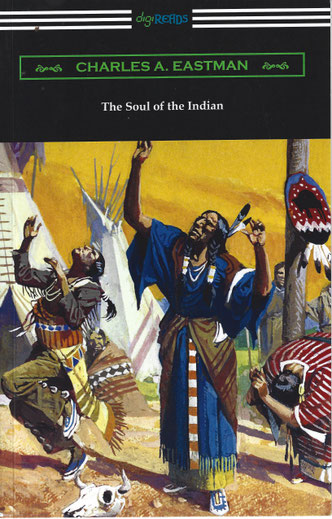
Charles A. Eastman (Ohíyesa): „The Soul of the Indian”, Digireads.com Publishing 2020, 38 S., ISBN 13:978-1-4209-6633-6, Cover Image: detail of “Sioux ghost dance” by Severino Baraldi/Bridgeman Images.
„The Soul of the Indian” ist vollständig abrufbar beim Netzwerk TAIRP unter: https://www.gatewaytotheclassics.com/browse/display.php?author=eastman&book=soul&story=spirits
4. Mai 2026 Copyright Christel Heybrock
Chapter 6: "On the Border-Land of Spirits"
The final chapter leads Eastman ever deeper into authentic Native American concepts. Under the pressure of the growing difficulty of his undertaking—to convey the "soul of the Indian" to white Christian readers—he distances himself with increasing clarity from that very soul, going so far as to speak of "superstition." In his attempt to bridge this cultural divide, he adopts viewpoints that he has experienced and learned as rational modes of thought among white people—including, presumably, his own wife—yet which serve to alienate him from his own mental heritage and, consequently, from himself.
He opens the chapter by addressing Native American conceptions of dying, death, and mourning rituals. Death holds no terror for Native Americans; their only concern, if any, is for their descendants. Death in battle is considered more honorable than death at home—indeed, the dying were traditionally carried outdoors so that they might find their way. Originally, Native Americans held no concept of an afterlife; rather, they assumed that the Great Mystery—here, unlike Eastman (Ohíyesa), one should employ the Lakota term rather than the English one—that *Wakan Tanka* would reabsorb the deceased back into itself. They believed that the notion of otherworldly "hunting grounds" likely originated with white people (who, after all, indulge in fantasies of Heaven and Hell, trumpet-blowing angels, and eternal fire). For in the certainty of returning to the source from which they came—to "Nature"—indigenous peoples grasped the precise reality of physics. This would likely have been impossible to explain to Eastman’s contemporary Christian readership; moreover, under the onslaught of Christian concepts, this primal indigenous cosmic trust has largely faded among modern Native Americans.
Nevertheless, Eastman vividly portrays the distinct customs surrounding the grieving process—such as the practice of taking a lock of hair from the deceased, preserving it in a place of honor for a full year, and subsequently laying it to rest. That mourning entailed cutting off one’s long hair (what a disaster for schoolchildren to be forced to cut their hair under white rule!). Native Americans tore ornaments from their clothing, perhaps gave away everything they owned, and mourned to the point of physical self-harm; the practice of gashing one’s arms and legs has not, even today, necessarily become a thing of the past.
This visible behavior—manifesting at the threshold between life and death—could be explained to a certain extent. But Eastman brings to light mental faculties that are alien to "civilization": spiritual connections, premonitions, and perceptions of a non-rational origin. A Sioux prophet, he notes, had predicted the arrival of the white man fifty years earlier—foretelling every detail of their appearance, their clothing, and their weaponry. Another had foreseen the steamboat. Ta-chank-pee Ho-tank-a—one of the few seers cited by name—had known in advance the outcome of a war against the Ojibway; and even Eastman’s own grandmother—like many other women—had physically sensed, or nervously intuited, impending momentous events or dangers. Admittedly, there were likely charlatans and frauds in those days as well; yet even Christians, Eastman observes, had attested to the veracity of such predictions.
“I cannot pretend to explain them, but I know that our people possessed remarkable powers of concentration and abstraction, and I sometimes fancy that such nearness to nature as I have described keeps the spirit sensitive to impressions not commonly felt, and in touch with the unseen powers.”
This constitutes the very essence of the indigenous lived reality—described here for a white audience, yet not by a white man. However, the fact that it is a Native American speaking here becomes evident—at best—through the subject matter itself; at most, Ohíyesa refers to a few of his relatives—but never to himself as someone who personally shares in this lived reality. It is not only in light of this final chapter that one is prompted to reflect on his personal standpoint—and one discovers a man suspended between worlds. His memory belongs to his origins; his present belongs to white society, to the medical profession (the practice of which was ultimately denied him because he had advocated too vigorously for indigenous causes), and to the bridging of cultures. But to whom did he himself belong—to whom did his love belong, that deepest dimension of his existence?
Eastman was arguably the first indigenous person to lay the foundation for mutual understanding—doing so through compromises that subsequent authors were no longer willing to make. When, in 1930, Black Elk dictated his great vision for John Neihardt’s records, he spoke—despite having by then converted to Catholicism—as an Indian seer. Joseph Marshall III wrote as a wise, empathetic storyteller; John and Archie Fire Lame Deer were life-affirming healers and shamans—to say nothing of "professional shamans" like Medicine Grizzly Bear or activists like Russell Means. All of them demonstrate that it is indeed possible to convey a way of thinking that is foreign to one’s own, but rather to leave it foreign and authentic, for there is a risk that a precious thing may lose its luster if subjected to too much pressure to assimilate.
The unassuming depth that Ohíyesa achieved in his tales *Red Hunters and the Animal People*—precisely that quality—lost its intensity in *The Soul of the Indian*, and in his autobiography, *From the Deep Woods to Civilization*, it appears merely as factual information. One must admit, however, that the substantive work of Eastman’s life consisted of mentoring and advising Native people, advocating for them before government agencies, fighting for their rights, and disseminating knowledge about them through public lectures. This represents a monumental life’s achievement—even if one might have wished for a glimpse of Ohíyesa from the inside out.
For, strictly speaking, even the title of *The Soul of the Indian* is jarring. The term "soul" denotes a specifically Christian conception of the human being as a tripartite entity comprising body, soul, and spirit—a concept that finds no equivalent in the traditional cosmic interconnectedness of Indigenous peoples. One might have wished for a Native voice here that unsparingly articulated its fundamentally different rootedness in the world. Does it truly help white readers to understand if they are told how closely related they supposedly are in their thinking and beliefs?
The matter of "faith," too, ultimately harbors an unbridgeable discrepancy. Christians must, in fact, "believe," for Christianity is fundamentally an imaginative abstraction; Indigenous rootedness in the world, by contrast, is bound to visible, experiential reality. Indigenous thought is not religious, but spiritual; it is an intense immersion in reality—reaching even into the realm of the ineffable. And that constitutes a fundamentally different conception of human existence.
Charles A. Eastman (Ohíyesa): *The Soul of the Indian*, Digireads.com Publishing 2020, 38 pp., ISBN 13: 978-1-4209-6633-6, Cover Image: detail of “Sioux Ghost Dance” by Severino Baraldi/Bridgeman Images.
*The Soul of the Indian* is available in its entirety via the TAIRP network at: https://www.gatewaytotheclassics.com/browse/display.php?author=eastman&book=soul&story=spirits
Copyright Christel Heybrock
Translation by Google
Zur deutschen Ausgabe:
Scroll down for English version
Die von Robert Josef Kozljanic herausgegebene Ausgabe erschien 2009 zum 70. Todesjahr von Eastman – sie ist offenbar nach der Erstausgabe im Leipziger Insel Verlag 1938 die einzige und heute gängige deutsche Ausgabe. Es ist anscheinend nicht möglich, Eastmans Schrift einem deutschsprachigen Publikum einfach als literarisches Dokument vorzustellen – im Albunea Verlag ist der Titel in der Reihe „Naturreligion und Mythologie“ erschienen und wendet sich damit eher an Esoteriker.
Dem Herausgeber Kozljanic ist ein rund 25-seitiges Nachwort zu danken, das deutsche Leser über die Person Eastmans, seine Herkunft und die Probleme seiner Zeit informiert. Kozljanic ist Vertreter einer Lebens- und Naturphilosophie und als Kursleiter, Autor und Verleger tätig; er gibt das „Jahrbuch für Lebensphilosophie“ heraus. Von diesem Standort aus erscheint eine neutrale Einordnung von Eastmans Buch in die indigene Literatur der USA schwierig. Bei allen Vorzügen der Vermittlung biographischer Fakten, die im deutschsprachigen Raum nicht jedem bekannt sind, scheint es mir nicht angebracht, Eastman als „Romantiker“ zu definieren – dann müsste man die Substanz traditionellen indigenen Denkens als romantisch bezeichnen, nach deutschem Sprachgebrauch als weltfremd. Dabei war und ist kaum eine Kultur der Menschheitsgeschichte so realitätsverwurzelt wie die von indigenen Menschen.
Kozljanic schränkt seriöserweise den Romantiker-Begriff auch wieder ein und greift zu „mythisch“ und „naturreligiös“, will aber auch die esoterische Ecke ausdrücklich vermeiden. Seine etwas verzweifelten Versuche, Eastman in irgendeine weiße Vorstellung einzuordnen, macht das ganze Dilemma unterschiedlicher Denkweisen deutlich. In gewisser Weise befindet sich Kozljanic in einer ähnlichen Situation wie einst Eastman selbst.
Um eine Erklärung zu versuchen:
Die weiße Zivilisation gewinnt Erkenntnis durch Sezieren – man nimmt komplexe Phänomene möglichst detailliert auseinander und beleuchtet sie einzeln, klebt Begriffe, die den Rezipienten vertraut sind, auf die Details und bietet ihnen etikettierte Facetten an. Indianisches Denken funktioniert völlig anders. Es funktioniert gar nicht zwangsläufig über Sprache – die Distanz zu sprachlichen Definitionen ist fast immer spürbar. Indianisches Denken funktioniert primär auch nicht über Definitionen, sondern über die Gesamtheit der Wahrnehmung eines komplexen Phänomens. Man schneidet die „Sache“, um die es geht, nicht auseinander, weder sprachlich noch mit dem Messer. Man versucht, die gleiche spirituelle Ebene einzunehmen und das “Ding“, das Lebewesen oder das Problem, durch mitdenkende Einfühlung zu erkennen. Es ist Erkenntnis durch Eindringen, nicht durch Zerlegung. Dabei bleibt der „Gegenstand“ er selbst. Wie weit den Erkenntnissuchenden dieser Gegenstand verändert, wie weit es gar einen wechselseitigen Austausch gibt – bleibt dem Suchenden vorbehalten. Diese Erkenntnismethode ist hoch spirituell, aber nicht mythisch und nicht naturreligiös, sie ist einfach, Punkt.
Dass Ohíyesa seiner weißen Leserschaft mitunter irritierende Zugeständnisse gemacht hat, verschweigt auch Kozljanic nicht – Ohíyesa wird sogar in der indigenen Literaturwissenschaft kontrovers beurteilt. Aber dass „Die Seele des Indianers“ schlussendlich ein „naturreligiöses Weisheitsbuch“ sei und „die Chance auf ein inniges Verständnis echt mythischer Kultur und Weisheit“ böte… muss man Ohíyesa wirklich dann doch in diese trendige Ecke schieben? Man wird seiner Lebensleistung als Denker und Kulturvermittler damit nicht gerecht.
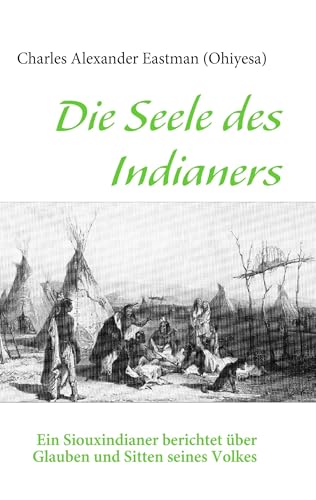
Charles Alexander Eastman (Ohiyesa): „Die Seele des Indianers. Ein Siouxindianer berichtet über Glauben und Sitten seines Volkes“, übersetzt von Andrea Pia Kölbl und Robert Josef Kozljanic, Albunea Verlag, München 2009, 101 S., Nachwort von Robert Josef Kozljanic, Cover mit der Darstellung eines indianischen Totengerüsts von Karl Bodmer aus Prinz zu Wied, „Reise in das innere Nord-Amerikas“, Koblenz 1839-1841, ISBN 978-3-937656-10-6
4. Mai 2026 Copyright Christel Heybrock
Regarding the German Edition:
The edition edited by Robert Josef Kozljanic was published in 2009 to mark the 70th anniversary of Eastman’s death; it appears to be—following the first edition published by the Leipzig-based Insel Verlag in 1938—the only German edition currently in print. It seems that presenting Eastman’s work to a German-speaking audience simply as a literary document is not an option; published by Albunea Verlag as part of the series "Nature Religion and Mythology," the title is thus aimed primarily at readers with an interest in esotericism.
The editor, Kozljanic, deserves credit for a postscript of some 25 pages, which informs German readers about Eastman as a person, his background, and the challenges of his era. Kozljanic is an advocate of a philosophy of life and nature, active as a course instructor, author, and publisher; he also edits the *Jahrbuch für Lebensphilosophie* (Yearbook for the Philosophy of Life). Viewed from this perspective, a neutral classification of Eastman’s book within the context of Indigenous literature in the USA appears difficult. For all the merits of providing biographical details—facts not widely known to every reader in the German-speaking world—it strikes me as inappropriate to label Eastman a "Romantic." To do so would imply that the very essence of traditional Indigenous thought is "romantic"—or, in the German linguistic idiom, "out of touch with reality." Yet, throughout human history, few cultures have been—or remain—as deeply rooted in reality as those of Indigenous peoples.
To his credit, Kozljanic does subsequently qualify this notion of Eastman as a "Romantic," opting instead for terms such as "mythic" and "nature-religious"—though he also explicitly seeks to avoid pigeonholing the work into the realm of esotericism. His somewhat strained attempts to fit Eastman into a framework of Western conceptualization serve to highlight the fundamental dilemma inherent in the clash of differing worldviews. In a sense, Kozljanic finds himself in a situation similar to that of Eastman himself in his own time.
To attempt an explanation:
Western civilization gains insight through dissection—it takes complex phenomena apart in the greatest possible detail, examines them individually, affixes concepts familiar to the audience to these details, and presents them with these labeled facets. Indigenous thought functions in a completely different way. It does not necessarily operate through language at all—a certain distance from linguistic definitions is almost always palpable. Furthermore, indigenous thought operates primarily not through definitions, but through the totality of one’s perception of a complex phenomenon. One does not cut apart the "thing" in question—neither linguistically nor with a knife. Instead, one attempts to occupy the same spiritual plane and to comprehend the "thing"—be it a living creature or a problem—through empathetic engagement. It is insight gained through immersion, not through dissection. In this process, the "object" of inquiry remains itself. To what extent this object transforms the seeker—or indeed, whether a reciprocal exchange takes place—remains a matter for the individual seeker to determine. This method of inquiry is deeply spiritual, yet it is neither mythical nor merely a form of nature worship; it is simply what it is—period.
Kozljanic does not gloss over the fact that Ohíyesa occasionally made concessions to his white readership that were, at times, jarring—indeed, Ohíyesa is viewed with some degree of controversy even within the field of indigenous literary science. But to claim that *The Soul of the Indian* is, ultimately, merely a "book of nature-based wisdom" offering "the chance for an intimate understanding of truly mythical culture and wisdom"... must we really pigeonhole Ohíyesa into such a trendy niche? To do so fails to do justice to his life’s work as a thinker and a cultural intermediary.
Charles Alexander Eastman (Ohiyesa): *The Soul of the Indian: A Sioux Indian Reports on the Beliefs and Customs of His People*, translated by Andrea Pia Kölbl and Robert Josef Kozljanic, Albunea Verlag, Munich 2009, 101 pp., Afterword by Robert Josef Kozljanic, Cover featuring an illustration of a Native American burial scaffold by Karl Bodmer, from Prince zu Wied, *Travels in the Interior of North America*, Koblenz 1839–1841, ISBN 978-3-937656-10-6
May 4, 2026 Copyright Christel Heybrock
Translation by Google