Die Fakten von Kolonialisierung und Widerstand
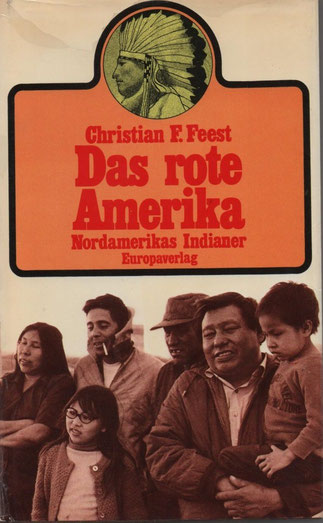
Christian F. Feest: „Das rote Amerika. Nordamerikas Indianer“
Scroll down for English version
Es ist fast 50 Jahre her, seit das Buch des österreichischen Ethnologen Christian F. Feest erschien und deutschsprachigen Lesern die Geschichte der amerikanischen Urbevölkerung vor Augen führte: Aus den einst vitalen Völkern wurden im Verlauf der gewaltsamen Eroberung des Kontinents Entrechtete, in Reservate Abgedrängte und politisch Vergessene. Nun sind 50 Jahre eine lange Zeit, und inzwischen hat nicht nur Feest weitere Publikationen verfasst, sondern es haben auch Historiker wie der Finne Pekka Hämälainen und der Schweizer Aram Mattioli sich der Geschichte und Gegenwart der indigenen Nationen Nordamerikas angenommen und deren Resilienz konstatiert.
In USA wie in Europa hat sich durch diese Publikationen aber nicht viel verändert. Befinden sich die Natives in USA weiterhin in sozialem Abseits und politischer Irrelevanz, so sind sie in Europas breiter Öffentlichkeit praktisch kein Thema. Wird über das Ringen nach sozialer Gerechtigkeit vonseiten der schwarzen Bevölkerung immer mal berichtet, so scheint es in Medien, die gelegentlich über Amerikas Landschaftsschönheiten berichten, als gäbe es überhaupt keine Indianer und als wären sie auch nie existent gewesen.
Davon ausgenommen sind indianerspielende Kinder, Karl-May-Festspiele und ein paar empathische, nun ja: Spinner, die Hilfsprogramme aus der Alten Welt in die Neue schicken und die Natives zumindest mental etwas stärken. Feest stellt in seinem Buch durchaus auch die Frage, woher die immer noch vorhandene Indianer-Bewunderung von Leuten kommt, deren Vorfahren doch am Untergang dieser Menschen mitgewirkt haben – jaja, der „edle Wilde“ spielt da wohl eine Rolle, die insgeheim auch etwas belächelte moralische Überlegenheit der roten Menschen über das wenig moralische Verhalten der weißen. Feest geht diesem Fragenkomplex hier aber nicht auf den Grund.
Überhaupt ist sein Buch nicht unbedingt tiefschürfend, was Mentalität und spirituelle Bindungen der Natives betrifft. Dafür liefert es Fakten, zu denen man sonst keinen einfachen Zugang hat: Dokumente, politische Entscheidungen, Statistiken über soziale und arbeitsrechtliche Bedingungen, über Gesundheitswesen, Berufsaussichten, juristische Gegebenheiten, Einrichtungen weißer Machtausübung wie das berüchtigte Bureau of Indian Affairs (BIA) und andere Maßnahmen zur Erschwerung und Unterdrückung akzeptabler Lebensbedingungen. Allein die Literaturliste ist mehr als 30 Seiten lang.
Und was Feests Buch vollends unverzichtbar macht, sind die Schilderungen indianischen Widerstands in den sechziger/siebziger Jahren, die er hautnah miterlebt hat – die Besetzung der einstigen Strafinsel Alcatraz vor der Küste von San Francisco 1969 und des Dorfes Wounded Knee 1973. Alcatraz, ein praktisch unbewohnbares Felseneiland, sollte ein Stück Indian Country werden. Die roten Rebellen beriefen sich dabei sarkastisch auf ihr „Entdeckerrecht“ und boten den weißen Behörden sogar einen Kaufpreis an, nämlich wie einst die Holländer beim „Erwerb“ von Manhattan: 24 Dollar in Glasperlen und Tuchstoff. Darüber hinaus sollte für die Weißen ein Reservat errichtet werden, beschützt durch ein „Bureau of White Affairs“, und man stellte ihnen die „Unterweisung in indianischer Lebensart und Religion in Aussicht, um die Weißen aus ihrer barbarischen und unglücklichen Situation zu befreien.“
Da möchte man doch heute noch den Natives zurufen: Leute, mitákuyepi, wo seid ihr denn, so was hat doch immer noch Potential?! Aber ach, Alcatraz ist wie die Besetzung von Wounded Knee an allen möglichen Umständen gescheitert, nicht zuletzt daran, dass die felsige Gefängnisinsel so ungemütlich zum Leben und Wohnen ist. Und die Welt hat sich seither mehrmals verändert. Indigene Menschen sind außerhalb der Reservate in scheinbarer Assimilierung erfolgreiche Wissenschaftler, Künstler und Wirtschaftsleute geworden, während ihre Stammesgenossen abseits der Städte an Krankheiten, Hunger, Kälte und sozialer Stagnation leiden - bei Jugendlichen ist die Selbstmordrate in den Reservaten erschreckend hoch.
US-Präsident Joe Biden hatte vielerorts indigene Rechte gestärkt, die Rückgabe von Land ermöglicht und überhaupt Aufmerksamkeit auf indigene Bedürfnisse gerichtet – Verbesserungen, die unter der Trump-Regierung systematisch rückgängig gemacht werden. Will man Feests Buch, das keineswegs überholt ist, eine Schlussfolgerung entnehmen, dann ist es eine, die sich offenbar ständig fortsetzt: Der Umgang der Weißen mit den indigenen Nationen ist auf breiter Basis böswillig, arrogant und inkompetent geblieben.
463 S. mit Namens-, Sachregister und Bibliographie, Europaverlag Wien 1976, ISBN 3-203-50577-0
27. April 2025 Copyright Christel Heybrock
The Facts of Colonization and Resistance
Christian F. Feest: *Das rote Amerika. Nordamerikas Indianer* [Red America: North America’s Indians]
It has been nearly fifty years since the Austrian ethnologist Christian F. Feest published this book, revealing the history of America’s indigenous peoples to German-speaking readers: over the course of the continent’s violent conquest, once-vibrant nations were stripped of their rights, forced onto reservations, and politically marginalized. Fifty years is a long time, of course; since then, not only has Feest produced further publications, but historians such as the Finn Pekka Hämäläinen and the Swiss scholar Aram Mattioli have also addressed the history and present-day reality of North America’s indigenous nations, highlighting their resilience.
Yet, these publications have not brought about much change in either the US or Europe. While Native Americans in the US remain socially marginalized and politically irrelevant, they are virtually a non-issue for the general public in Europe. Although the Black population’s struggle for social justice is occasionally reported on, media outlets that might otherwise cover America’s scenic landscapes often act as if Native Americans do not exist—or indeed, never did.
Exceptions to this include children playing "Indians," Karl May festivals, and a few empathetic—well, let’s call them eccentrics—who send aid programs from the Old World to the New, offering at least some measure of moral support to Native Americans. In his book, Feest does raise the question of where this enduring admiration for Native Americans comes from among people whose own ancestors contributed to the destruction of these very peoples. The "noble savage" trope certainly plays a role here—that notion, perhaps secretly viewed with a touch of condescension, of the moral superiority of "Red" people over the morally questionable behavior of Whites. However, Feest does not delve deeply into this complex issue here.
All in all, the book does not necessarily offer profound insights into the mindset and spiritual ties of Native Americans. Instead, it provides facts that are otherwise difficult to access: documents, political decisions, and statistics regarding social and labor conditions, healthcare, job prospects, legal realities, and institutions of white power—such as the notorious Bureau of Indian Affairs (BIA)—as well as other measures designed to hinder or suppress decent living conditions. The bibliography alone spans more than 30 pages.
What makes Feest’s book truly indispensable, however, are his firsthand accounts of Native American resistance during the 1960s and 1970s—specifically the occupation of the former prison island of Alcatraz, off the coast of San Francisco, in 1969, and the occupation of the village of Wounded Knee in 1973. Alcatraz, a rocky island that was virtually uninhabitable, was intended to become a piece of "Indian Country." The "Red rebels" sarcastically invoked their own "right of discovery" and even offered to buy the land from white authorities—mimicking the Dutch purchase of Manhattan—for 24 dollars’ worth of glass beads and cloth. Furthermore, they proposed establishing a reservation for white people, overseen by a "Bureau of White Affairs," and promised "instruction in the Native American way of life and religion to liberate whites from their barbaric and wretched state."
Even today, one feels like calling out to the Native Americans: "Folks—*mitákuyepi*—where are you? That idea still has potential!" But alas, like the occupation of Wounded Knee, the Alcatraz initiative ultimately failed due to a host of factors—not least the fact that the rocky prison island was a terribly inhospitable place to live. And the world has changed many times over since then. Outside the reservations, Indigenous people have become successful scientists, artists, and businesspeople—seemingly assimilated—while their tribal kin living away from the cities suffer from disease, hunger, cold, and social stagnation; suicide rates among youth on the reservations are alarmingly high.
US President Joe Biden had strengthened Indigenous rights in many areas, facilitated the return of land, and drawn attention to Indigenous needs—improvements that are being systematically reversed under the Trump administration. If one were to draw a conclusion from Feest’s book—which is by no means outdated—it is one that evidently remains valid: the way white society treats Indigenous nations has remained, on a broad scale, malicious, arrogant, and incompetent.
463 pages, including an index of names, a subject index, and a bibliography; Europaverlag Vienna, 1976; ISBN 3-203-50577-0
April 27, 2025 Copyright Christel Heybrock
Translation by Google