Land und Menschen, eine spirituelle Identität
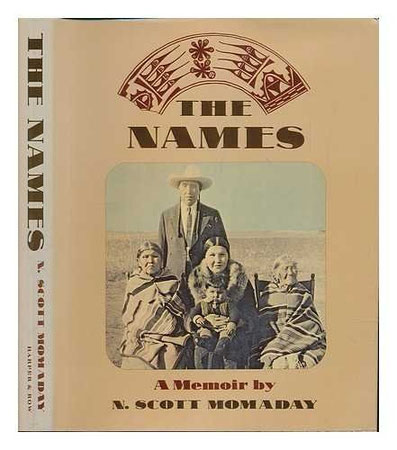
In dem Memoir „The Names“ blickt Kiowa-Autor N. Scott Momaday zurück auf seine Vorfahren und die Jahre in Jemez/New Mexico
Scroll down for English version
Zwei Dinge prägen indianische Identität – Familie und Vorfahren sowie das Land. Die aktuell von Indigenen verbreitete Forderung „Land back“ meint nicht irgendein Stück Wald, Prairie oder Wüste, sondern: ich will mein Land zurück, in dem meine Vorfahren begraben sind und in dem ich meine Wurzeln habe. “Land back“ heißt: Ich will mein Recht auf mich selber zurück.
Das sollte man als Weißer im Kopf haben, wenn man N. Scott Momadays Memoir „The Names“ liest. Momaday hat in fast allen seiner Bücher den Ursprungsmythos seines Volkes, der Kiowa, beschworen - die „Kwuda“, die „Hervorgekommenen“ aus einem hohlen Baumstamm, sprich aus beengten Verhältnissen, sie definieren das Selbstverständnis dieses Autors ebenso wie der Devil’s Tower, der Rock-Tree-Felsen zwischen South Dakota und Wyoming, von dem Momaday seinen indigenen Namen Tsoai talee = Rock Tree Boy hat. In „The Names“ greift er auf vier Generationen seiner Familie zurück - soweit sie sich eben verfolgen ließ – und bezieht sich auf zwei Linien, die schließlich bei ihm zusammenlaufen.
Da ist einmal die Linie aus dem Südwesten mit der einst von Kiowas gekidnappten mexikanischen Sklavin Kau-au-ointy, die sich klug und durchsetzungsfähig in den Stamm integrierte. Und da sind andererseits Vorfahren aus dem Osten, aus Virginia und Louisiana, mit einer latenten Reminiszenz an Europa: Hatte Gründungsvater I.J. Galyen unter anderem französisches Blut? Wie auch immer, er heiratete die Kiowa Natachee, nach der später Momadays Mutter benannt wurde. In vier Teilen rekapituliert Momaday die Geschichten der beiden familiären Linien und die seiner Kindheit und Jugend sowie die wichtigsten Erfahrungen aus seiner Zeit in Jemez Pueblo/New Mexico, wo seine Eltern an der Tagesschule arbeiteten.
Charakteristisch ist Momadays Erzählkunst, in scheinbar lockerem Plauderton einzelne Personen nicht nur in Aussehen und mit Anekdoten vorzustellen, sondern sie immer als verwoben mit ihren Standorten auftreten zu lassen, mit Stimmen, Geruch, Geräuschen, ihren Innenräumen oder der luftigen Laube, mit Tages- und Mondlicht, mit Stürmen, Sommerhitze, Schnee und Eiseskälte. Da gibt es eine berührende, Generationen übergreifende Szene zwischen dem kleinen Buben Momaday und seiner Urgroßmutter Keah-dine-keah ( Kau-au-ointys Tochter), die einst eine willensstarke junge Frau war, besser reiten konnte als die Männer – und sich nach dem allzu frühen Tod ihres Sohnes Mammedaty immer mehr in sich selbst zurück zog. Momaday (der Familienname war von „Mammedaty“ abgeleitet) beschreibt das Zimmer, das die alte Frau kaum mehr verlässt, sie ist blind, immer noch voll Würde, Momadays Vater Huan-toa spricht Kiowa mit ihr, und das Kind, von dem zwischen Urgroßmutter und Vater die Rede ist, legt schließlich seine Hände in ihre, die klein und so zart sind, als wären sie nicht wirklich aus Fleisch und Blut: „Long afterwards I think: That was a wonderful and beautiful thing that happened in my life. There, on that warm, distant afternoon: an old woman and a child, holding hands across generations.”
Es gibt wahnwitzige kleine Geschichten, die nicht wegen ihrer Effekte erzählt werden, sondern weil sie Lebensrealität spiegeln. So die Geschichte von Momadays Mutter Natachee, die als junge Ehefrau bei den Schwiegereltern Mammedaty und der schönen, eigenwilligen Aho leben musste - sie und Aho tendierten offenbar beide zur Mentalität von Alphaweibchen. Seine Mutter sei von den Schwiegereltern nicht freundlicher aufgenommen worden als im Jahrhundert zuvor die Sklavin Kau-au-ointy, lässt Momaday durchblicken, und der junge Ehemann Huan-toa unternahm auch nichts, um seine Frau zu schützen, obwohl ihre Verbindung leidenschaftlich und intensiv war.
Der mit Momaday schwangeren Natachee wurde wegen der Spannungen geraten, in einer Klinik zu entbinden, aber die Klink war weit weg, und Natachee langweilte sich, weil kein Besuch kam. Schließlich ließ sie sich im Bademantel nachts per Anhalter „nachhause“ fahren, und derweil Mammedaty und Aho schliefen, war nur der Familientrinker James wach - der empfing Natachee mit der Flinte in der Hand. Es passierte offenbar nichts Schlimmeres, und eingebettet in den doch recht prekären Vorgang ruft Momaday das Bild der nächtlichen Landschaft hervor: „There is a whole silence on the earth… the river running and lapping. And the plain rolls like water in the low night…Oklahoma shines like the Moon.” Diese Gleichzeitigkeit und Gleichwertigkeit aller Vorgänge, der menschlichen und der in der Natur, aber auch des historischen und des jeweils aktuellen Geschehens, ist ein Charakteristikum fast aller indigenen Autoren, speziell aber das von Momaday.
Er kam schließlich am 27. Februar 1934 im “Kiowa and Comanche Indian Hospital” in Lawton/Oklahoma zur Welt, einem historisch belasteten Ort, denn die Klinik lag „…near the old stone corral at Ford Sill, where my ancestors were imprisoned in 1873 for having fled to the last buffalo range in the staked Plains.”
In alle Vorfahren, soweit er Details ihres Lebens in Erfahrung bringen konnte, fühlte Momaday sich intensiv ein, imaginierte ihren Alltag und ihre kulturelle Verwurzelung. So berichtet er von seinem Urgroßonkel Pohd-lohk, wie der einen Tag in der Laube verbrachte und wie es dort aussah: „Inside, on such a day as this, there are innumerable points of light at the roof, like stars… At times you can hear the wind, for it runs upon the walls and moans…” Details, die nicht ihres poetischen Hintergrunds wegen aufgeführt werden, sondern weil sie als Äußerungen der lebendigen Erdatmosphäre den gleichen Stellenwert haben wie menschliches Handeln.
Pohd-lohk, der den wenige Monate alten Momaday zum Rock-Tree-Felsen brachte und ihm den Namen gab, war Analphabet. Aber er sorgte penibel für ein Ledgerbook, das im November 1833 begonnen hatte, dem Monat des historischen Meteoritenregens. Pohd-lohk trug wie seine Vorgänger zeichnend die Ereignisse seiner Lebenszeit ein, was für Momaday Anlass ist, sich auch denen mitunter ausführlicher zu widmen, bevor er zurück auf seine Erzähllinie kommt, die keine Gerade ist, sondern die charakteristische Kreis- oder Spiralstruktur indigenen Erzählens schlechthin. So wird in dem Ledgerbook die verheerende Epidemie von 1837-1840 erwähnt, bei der ein Drittel der Plains-Indianer starb, aber auch der Sonnentanz der Nez Percé 1883, die fünf Jahre zuvor aus der Haft in Fort Leavenworth entlassen worden waren – Pohd-lohk hat Chief Joseph Nez Percé noch selbst gekannt. Aber es sind nicht die „großen“ Ereignisse, sondern die Erfahrungen scheinbar unbedeutender Menschen an der Grenze zur Anonymität, die Momaday für behutsame Exkursionen herausgreift.
Die wichtigen Jahre in Jemez
Die für ihn wichtigsten Jahre aber war die Schulzeit in Jemez, wo er zwischen Land und Leuten sein Selbstverständnis entwickelte. Viele Details in seinem preisgekrönten Roman “House Made of Dawn“ erscheinen plastischer und anschaulicher nach der Lektüre der langen, teilweise ohne Satzzeichen als Bewusstseinsstrom dahinfließenden Textpassagen in „The Names“. Die Farben und Formationen der Cañon-Landschaft, die kleinen Landwirtschaftsbetriebe im Tal mit ihren sorgfältig gepflegten Bewässerungskanälen, die Sprache der Bewohner, deren Kinder im Unterricht bei Natachee erst Englisch lernen mussten, und vor allem die Feste teils indigenen, teils christlichen Ursprungs - Momaday entwickelt das atmende, vielfältige, vibrierende Bild einer einzigartigen Landschaft.
In “House Made of Dawn“ (der Titel ist eine poetische Metapher für eben diesen Lebensraum) fügte Momaday verschiedene Feste zu einem dramatischen Ereignis zusammen, ohne die pittoresken Details der von überall eintreffen Navajos mit ihrem reichen Türkis- und Silberschmuck oder die Bratendüfte aus den allseits für Fremde geöffneten Häusern zu vernachlässigen. Die Vielsprachigkeit zwischen Englisch, Spanisch, Kiowa und Navajo, die Multireligiosität und ihre Auswirkungen auf das Verhalten von Individuen – sie wurden für Momadays Sicht auf die Welt ebenso fundamental wie die Integration in diese Landschaft, die er mit tiefem Einverständnis beschreibt: „The character of the landscape changed from hour to hour in the day, and from day to day, season to season… you felt that creation was going on in your sight… From my home of Jemez I could see the huge, billowing clouds above the Valle Grande… how they drew close upon me and merged with my life.”
Und er definiert die Basis indianischer Weltauffassung, wie sie auch bei anderen Autoren, etwa bei Tommy Orange in dem Roman “There There“ zu spüren ist: den Ort. Momaday: „The events of one’s life take place, take place… And a part of my life happened to take place at Jemez. I existed in that landscape…I placed my shadow there in the hills, my voice in the wind that ran there…”
Der Südwesten der USA hatte Momaday schon zuvor geprägt. Die Eltern hatten 1936 in Gallup und von 1936-1943 im Navajo-Reservat gearbeitet: „… home was particularly the Navajo country, Dine bikeya… Just at the time I was learning to talk, I heard the Navajo language all around me.” Er erinnert sich an den Vater und die Geschichten, die er dem Söhnchen erzählte, an die warmen Sommernächte im dunklen Zimmer, die Stimmen der Erwachsenen in der Laube, an die Großmutter, die vorm Schlafengehen auf Kiowa betete: „If I were to remember other things, I should be someone else.“
Grundsätzliche Erkenntnisse gewinnt er auch in der Erfahrung des Monument Valleys: „The valley is vast. When you look out over it, it does not occur to you that there is an end to it. You see the monoliths that stand away in space, and you imagine that you have come upon eternity. They do not appear to exist in time.” Das Tal könne angemessen nur beschrieben werden auf Navajo, in dine bizaad, einer Sprache, die endlos sei. Es ist eine der Passagen, an denen Momadays Auffassung von Sprache an sich aufblitzt – Sprache ist viel mehr als das Handwerkszeug eines Autors, sondern die Basis des Menschen, in der Welt zu sein. Die Lebensorte von Menschen und diese selbst erschließen sich erst durch Wörter und Namen, durch die Bezeichnungen, mit denen sie erkannt und verstanden werden. Sprache steht am Anfang der Auffassung des Menschen von sich selbst. Man muss das ganze Buch unter dem Aspekt der archaischen Bedeutung von Namen verstehen, und Momadays Sprachverständnis reicht zurück bis zu Heilungswörtern schamanistischer Beschwörungen. Insofern liegt seinem Erzählen immer auch eine Ahnung von unerschütterlicher Dauer, von Ewigkeit zugrunde, die nichts zu hat mit dem eitlen Selbstanspruch eines Autors, der kulturell überdauern möchte. Sprache reicht hier herab bis zum Ursprung von Menschen überhaupt.
Mit 13 hatte Momaday ein Pferd geschenkt bekommen: Pecos. Auf Pecos erkundete er weitere Teile der Umgebung, und in den Schlusssätzen quasi den amerikanischen Kontinent – eine Vorstellung, in der Realität und Imagination ineinanderfließen. Damit schließt sich weit ausgreifendes indianisches Denken in Spiralwindungen zum Kreis: Auf seinem roten „Pony“ besucht Momaday die Gräber seiner Vorfahren auf Rainy Mountain, in der Laube begrüßen sie einander, der junge Mann auf dem Pferd und die verstorbenen Großeltern Mammedaty und Aho, Urgroßonkel Pohd-lohk, am Abend erzählen sie einander Geschichten… Der Ritt führt den jungen Mann weiter, vorbei am Rock Tree, und zuletzt im Nebel, der von den Bergwolken herabfällt, findet er in dünner Eiskruste den „hollow log“, den hohlen Baumstamm, aus dem die Kiowa, die Kwuda einst heraus in die Geschichte krochen. „I touched the fallen tree, the hollow log there in the thin crust of the ice.” Der Ursprung der Kiowa, überwuchert vom Eis der Vergangenheit, aber noch immer sicht- und fühlbar. Berührt von den warmen Händen lebendiger Gegenwart. Indianisches Erzählen at its best.
„The Names“, a Memoir by N. Scott Momaday, Harper & Row Publishers, New York 1976, , bibliophile Ausgabe mit 170 S. und zahlreichen alten Familienfotos, ISBN 0-06-012981-6
Das Buch ist online verfügbar bei dem Netzwerk TAIRP
https://indigenous-tairp.com/: https://storage.ning.com/topology/rest/1.0/file/get/31093694289?profile=original
25. Februar 2026 Copyright Christel Heybrock
Land and People: A Spiritual Identity
In the memoir *The Names*, Kiowa author N. Scott Momaday looks back at his ancestors and his years in Jemez, New Mexico
Two things shape Native American identity: family and ancestors, and the land. The "Land Back" demand currently voiced by Indigenous people does not refer to just any patch of forest, prairie, or desert; rather, it means: I want back my land where my ancestors are buried and where my roots lie. "Land Back" means: I want to reclaim the right to my own self.
This is something white readers should keep in mind when reading N. Scott Momaday’s memoir *The Names*. In almost all his books, Momaday has evoked the origin myth of his people, the Kiowa—the *Kwuda*, or "Those Who Emerged" from a hollow log (symbolizing emergence from confined circumstances). This myth defines the author’s sense of self just as much as Devil’s Tower—the "Rock Tree" formation straddling the border of South Dakota and Wyoming—from which Momaday derives his Indigenous name, *Tsoai-talee* (Rock Tree Boy). In *The Names*, he draws upon four generations of his family—tracing the lineage as far back as records allow—and focuses on two ancestral lines that ultimately converge in him.
There is the line from the Southwest, featuring Kau-au-ointy, a Mexican slave once abducted by the Kiowa, who integrated herself into the tribe through her intelligence and assertiveness. Then there are the ancestors from the East—Virginia and Louisiana—who carry a faint echo of Europe: Did the forebear I.J. Galyen have French blood, among other strains? In any case, he married the Kiowa woman Natachee, after whom Momaday’s mother was later named. In four parts, Momaday recounts the stories of his two family lineages and his own childhood and youth, as well as key experiences from his time at Jemez Pueblo, New Mexico, where his parents worked at the day school.
Momaday’s storytelling is characterized by a seemingly casual, conversational tone; he introduces individuals not merely through their physical appearance or anecdotes, but by always presenting them as inextricably bound to their surroundings—amidst voices, scents, and sounds; within their interiors or under an airy arbor; and in the company of sunlight and moonlight, storms, summer heat, snow, and freezing cold. There is a touching, intergenerational scene between the young boy Momaday and his great-grandmother Keah-dine-keah (daughter of Kau-au-ointy). She had once been a strong-willed young woman who could ride better than the men—but who, following the untimely death of her son Mammedaty, had increasingly withdrawn into herself. Momaday (whose surname was derived from "Mammedaty") describes the room the old woman rarely leaves; she is blind yet remains full of dignity. Momaday’s father, Huan-toa, speaks Kiowa with her, and the child—the subject of their conversation—eventually places his hands in hers; her hands are small and so delicate they seem not to be made of flesh and blood: "Long afterwards I think: That was a wonderful and beautiful thing that happened in my life. There, on that warm, distant afternoon: an old woman and a child, holding hands across generations."
There are also wild, quirky little tales told not for dramatic effect, but because they reflect the reality of life. One such story concerns Momaday’s mother, Natachee, who as a young wife had to live with her in-laws—Mammedaty and the beautiful, strong-willed Aho; both she and Aho evidently possessed the temperament of alpha females. Momaday suggests that his mother was received no more warmly by her in-laws than the slave Kau-au-ointy had been a century earlier; furthermore, her young husband, Huan-toa, did nothing to protect her, even though their union was passionate and intense.
Due to the tensions, Natachee—who was pregnant with Momaday—was advised to give birth in a hospital; however, the facility was far away, and she grew bored as no one came to visit. Eventually, she hitched a ride "home" in the middle of the night while still wearing her bathrobe. While Mammedaty and Aho slept, only James—the family drinker—was awake; he greeted Natachee with a shotgun in his hand. Apparently, nothing serious came of the incident, and—framed within this rather precarious episode—Momaday evokes the image of the nocturnal landscape: "There is a whole silence on the earth… the river running and lapping. And the plain rolls like water in the low night…Oklahoma shines like the Moon." This simultaneity and equivalence of all events—human and natural, as well as historical and contemporary—is a characteristic feature of the work of almost all Indigenous authors, but especially of Momaday.
He was finally born on February 27, 1934, at the Kiowa and Comanche Indian Hospital in Lawton, Oklahoma—a place with a fraught history, for the clinic was located “…near the old stone corral at Fort Sill, where my ancestors were imprisoned in 1873 for having fled to the last buffalo range in the Staked Plains.”
Momaday deeply immersed himself in the lives of all his ancestors—insofar as he could uncover details about them—imagining their daily routines and their cultural roots. He recounts, for instance, how his great-great-uncle Pohd-lohk spent a day in the arbor and describes the scene there: “Inside, on such a day as this, there are innumerable points of light at the roof, like stars… At times you can hear the wind, for it runs upon the walls and moans…” These details are not included merely for their poetic quality; rather, as expressions of the living atmosphere of the earth, they hold the same significance as human actions.
Pohd-lohk, who took the infant Momaday to Rock Tree and gave him his name, was illiterate. Yet, he meticulously maintained a ledger book that had been started in November 1833—the month of the historic meteor shower. Like his predecessors, Pohd-lohk recorded the events of his lifetime through drawings; this prompts Momaday to dwell on these events at times in considerable detail before returning to his own narrative thread—a path that is not a straight line, but rather embodies the quintessential circular or spiral structure of Indigenous storytelling. The ledger book thus mentions the devastating epidemic of 1837–1840, which claimed the lives of one-third of the Plains Indians, as well as the Nez Perce Sun Dance of 1883—held five years after the tribe’s release from captivity at Fort Leavenworth. Pohd-lohk had even known Chief Joseph of the Nez Perce personally. Yet it is not the “major” events that Momaday selects for his thoughtful digressions, but rather the experiences of seemingly insignificant individuals hovering on the edge of anonymity.
The Formative Years in Jemez
However, the most important years for him were his school days in Jemez, where he developed his sense of self amidst the land and its people. Many details in his award-winning novel *House Made of Dawn* take on greater vividness and clarity after reading the long passages in *The Names*—sections that flow like a stream of consciousness, sometimes devoid of punctuation. From the colors and formations of the canyon landscape and the small valley farms with their meticulously maintained irrigation ditches to the language of the inhabitants—whose children had to learn English in Natachee’s classes—and, above all, the festivals of both indigenous and Christian origin, Momaday evokes a breathing, diverse, and vibrant portrait of a unique landscape.
In *House Made of Dawn* (the title is a poetic metaphor for this very setting), Momaday wove various festivals into a single dramatic event, all while capturing picturesque details: the Navajos arriving from all directions adorned in rich turquoise and silver jewelry, and the aroma of roasting food wafting from homes that were open to strangers. The multilingual mix of English, Spanish, Kiowa, and Navajo, along with the coexistence of multiple religions and their impact on individual behavior, became as fundamental to Momaday’s worldview as his integration into the landscape itself—a landscape he describes with a deep sense of connection: "The character of the landscape changed from hour to hour in the day, and from day to day, season to season… you felt that creation was going on in your sight… From my home of Jemez I could see the huge, billowing clouds above the Valle Grande… how they drew close upon me and merged with my life."
He also defines the foundation of the Native American worldview—a concept that resonates in the work of other authors, such as Tommy Orange in his novel *There There*: the importance of place. Momaday: “The events of one’s life take place, take place… And a part of my life happened to take place at Jemez. I existed in that landscape… I placed my shadow there in the hills, my voice in the wind that ran there…”
The American Southwest had already shaped Momaday. His parents had worked in Gallup in 1936 and on the Navajo Reservation from 1936 to 1943: “… home was particularly the Navajo country, *Diné Bikéyah*… Just at the time I was learning to talk, I heard the Navajo language all around me.” He remembers his father and the stories he told his young son, the warm summer nights in the dark room, the voices of the adults on the porch, and his grandmother praying in Kiowa before bedtime: “If I were to remember other things, I should be someone else.”
He also gains fundamental insights from the experience of Monument Valley: “The valley is vast. When you look out over it, it does not occur to you that there is an end to it. You see the monoliths that stand away in space, and you imagine that you have come upon eternity. They do not appear to exist in time.” The valley could be adequately described only in Navajo—in *Diné Bizaad*, a language that is endless. It is one of those passages where Momaday’s conception of language itself flashes into view—language is far more than an author’s tool; it is the foundation of human existence in the world. The places people inhabit, and the people themselves, only reveal their meaning through words and names—through the designations by which they are recognized and understood. Language lies at the very root of how human beings perceive themselves. The entire book must be understood in light of the archaic significance of names; Momaday’s understanding of language reaches back to the healing words of shamanic incantations. In this sense, his storytelling is always underpinned by a sense of unshakeable permanence—of eternity—that has nothing to do with the vain ambition of an author seeking cultural immortality. Here, language reaches all the way back to the very origins of humanity.
At the age of thirteen, Momaday was given a horse: Pecos. Aboard Pecos, he explored more of the surrounding area—and, in the book’s final sentences, the American continent itself—in a vision where reality and imagination merge. Thus, expansive Native American thought spirals back to form a complete circle: riding his red "pony," Momaday visits the graves of his ancestors at Rainy Mountain; there, in the arbor, they greet one another—the young man on horseback and his deceased grandparents, Mammedaty and Aho, and his great-great-uncle Pohd-lohk—sharing stories as evening falls. The ride takes the young man further, past Rock Tree, until finally—amidst the mist descending from the mountain clouds—he discovers, encased in a thin crust of ice, the "hollow log" from which the Kiowa (or *Kwuda*) once crawled forth into history. "I touched the fallen tree, the hollow log there in the thin crust of the ice." The origin of the Kiowa—overgrown by the ice of the past, yet still visible and tangible. Touched by the warm hands of a living present. Native American storytelling at its best.
"The Names," a memoir by N. Scott Momaday, Harper & Row Publishers, New York 1976; a collector's edition comprising 170 pages and numerous vintage family photographs; ISBN 0-06-012981-6
The book is available online via the TAIRP network https://indigenous-tairp.com/: https://storage.ning.com/topology/rest/1.0/file/get/31093694289?profile=original
February 25, 2026 Copyright Christel Heybrock
Translation by Google