Mit Anstand gegen gnadenlose Okkupanten
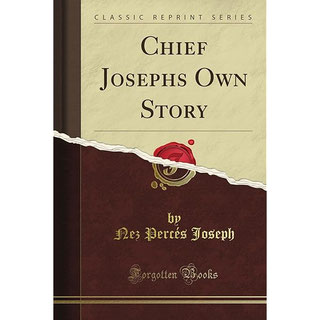
„Chief Josephs Own Story“ – der Kampf ums Überleben der Nez Percés
Scroll down for English version
Chief Joseph (1840-1904) erlangte Berühmtheit - nicht als Kriegshäuptling gegen die Weißen, obwohl er von weißen Militärs für sein taktisches Geschick geachtet wurde. Sondern im Gegenteil für die Akzeptanz der Niederlage – seiner Niederlage und der seines Volkes. Sein Satz “From where the sun now stands I will fight no more forever” wird bis heute zitiert und ist auch Titel eines Spielfilms mit Ned Romero als Chief.
Dieser Satz und die Lebenshaltung dahinter nötigten auch den Siegern Respekt ab, die einen ganzen Kontinent gnadenlos unterwarfen, aber Respekt bedeutete kein Umdenken und keine Revision des Handelns. Chief Joseph, weitsichtige Führungspersönlichkeit des eher kleinen Volkes der Nez Percés, war nie ein großer Kriegshäuptling, wenngleich er sich mit seinen Leuten zu wehren wusste. Doch überzeugt von der Übermacht der Weißen und in realistischer Einschätzung der eigenen Kräfte, setzte er sich immer wieder für Frieden ein, versuchte diplomatische Vereinbarungen zu treffen, um irgendwann die Usurpatoren davon zu überzeugen, dass auch ihnen ein dauerhafter Frieden von Vorteil sein müsse. Welch ein Irrtum.
Indianisches Denken ist nicht imstande, die weiße Gier nach Macht und Besitz von Grund auf zu verstehen. Wie es einmal in anderem Zusammenhang vonseiten eines weißen Historikers hieß, haben Indianer den Vernichtungswillen der Eroberer nie realisieren können – sie gingen immer von der Möglichkeit eines zwar distanzierten, aber letztlich friedlichen Zusammenlebens auf dem Kontinent aus. Denn sobald die Weißen verstünden, dass die eigentlichen Hüter des Landes (Besitz war Indianern nicht geläufig) im Grunde friedliche „Brüder“ waren, hätten sie doch einsehen müssen, dass Vertragsverletzungen, Lügen und brutale Kämpfe nicht zum Ziel führen konnten.
Friedliches Zusammenleben von Leuten, die als Normalzustand einander fremd, aber respektiert bleiben – das ist nichts, was Weiße sich nicht auch manchmal vorstellen könnten, aber es bleibt außerhalb ihrer Realität und wird als schöne Utopie eingeschätzt. Man kann sich zwar vorstellen, eigene Machtbefugnisse einzuschränken, mit Recht muss man aber immer fürchten, dass die freiwillig überlassenen Möglichkeiten missbraucht werden. Insofern konnten indianische Unterhändler, die sich auf Friedensverträge einließen, niemals Erfolg haben. Die weißen Gegner wussten das von Beginn an und empfanden die Argumente ihrer Vertragspartner als lächerlich und naiv. Wenn Indianer noch aus der Niederlage heraus um bessere Bedingungen kämpften mit Argumenten wie Hunger, Krankheiten, lebensfeindlichem und beengtem Lebensraum, wenn sie also humane Argumente vorbrachten, wie sie das untereinander und auch zwischen Gegnern gewöhnt waren, dann werteten die Kolonisatoren das keineswegs als Aufforderung, ihr Verhalten zu revidieren, sondern im Gegenteil als Erfolg für ihre eigene Sache – nämlich die Beseitigung der indigenen Bevölkerung.
Mit der Kolonisierung des amerikanischen Kontinents standen und stehen sich immer noch zwei Auffassungen vom Leben unvereinbar gegenüber. Die einen gieren nach Macht durch Machtmissbrauch, die anderen sehen Macht darin, sie mit anderen zu teilen. Es gab und gibt zwar gelegentlich schmale Wege hinüber und herüber, einzelne Personen, die einander verstehen und für einander einstehen – aber keine gangbare, stabile Brücke zwischen Völkern und Denkweisen.
Chief Josephs Situation ist exemplarisch für die indigenen Völker
Der Fall des Nez-Percé-Chiefs Joseph ist da exemplarisch. Was man in dem Digital-Reprint „Chief Josephs Own Story” nachlesen kann, skizziert in groben Zügen die Tragödie, die sich zwischen Weißen und Indigenen tausendfach abspielte. Individuell sind die Äußerungen des Chiefs insofern, als sie auf einen zutiefst humanen, einsichtigen Charakter schließen lassen. Der Text ist eine Art Autobiographie mit dem Ziel, verstanden zu werden, der Reprint wird mit einem Vorwort von Donald MacRae eingeleitet und durch eine zeitgenössische Einführung von William Hobart Hare (1838-1909) ergänzt, dem damaligen Bischof der Episcopal Church von South Dakota, der wohl auch ins Englische übersetzt hatte - der Originaltext erschien 1879 in der North American Review, der 1815 gegründeten ältesten amerikanischen Literaturzeitschrift, die bis heute existiert.
Die Situation, die Chief Joseph zwang, sich den Weißen gegenüber zu äußern, war der Versuch, in Washington vor Ministern und Kongressabgeordneten zu sprechen, um für seine Leute die Rückkehr ins Lapwai-Reservat zu ermöglichen. Die Nez Percé hatten 1877 auf der Flucht vor amerikanischen Truppen versucht, nach Kanada auszuweichen, wo sich Sitting Bull mit Getreuen befand. In die Enge getrieben kurz vor der Grenze, hätten die Nez Percé mit größerer Geschwindigkeit ihr Ziel auch erreicht, wenn Chief Joseph nicht Rücksicht auf Frauen, Kinder und Verwundete genommen hätte, die er nicht schutzlos zurücklassen wollte.
Einige wenige Nez Percés erreichten Sitting Bull tatsächlich und wurden trotz früherer Feindschaft hilfreich aufgenommen. Die vor der Grenze Verbliebenen waren zur Kapitulation gezwungen – Chief Joseph ließ sich unter der Bedingung darauf ein, dass Oberst Nelson A. Miles (1839-1925) die Rückkehr ins Lapwai-Reservat zusicherte. Das geschah nicht, im amerikanischen Kompetenzgerangel wurden die Nez Percés auseinander getrieben und in Oklahoma angesiedelt, wo viele an Malaria starben. Man muss die Veröffentlichung von Chief Josephs Text vor diesem Hintergrund sehen, dass er unerschütterlich an die Menschlichkeit seiner Gegner glaubte.
Und Argumente vorbrachte, die diesen wohl nicht mehr als amüsiertes Kopfschütteln abnötigten. Seine Rede beginnt tatsächlich so: “My friends, I have been asked to show you my heart… I believe much trouble and blood would be saved if we opened our hearts more.” In der Folge berichtet er über zunehmend schwierige Kontakte mit Weißen, über deren Versuche, die Nez Percés von ihrem angestammten Land zu vertreiben, über Verträge, die ausgehandelt und dann gebrochen wurden, über wachsenden Druck und Erpressungen. Darüber beispielsweise, dass einer von Chief Josephs Männern, der es gewagt hatte, General Oliver Otis Howard (1830-1909) zu widersprechen, kurzerhand inhaftiert wurde, wobei er dem arroganten Weißen noch versicherte: „You can arrest me, but you can not change me or make me take back what I have said.“
Und allen Brutalitäten der Besatzer in Wort und Tat hielt Joseph die Worte entgegen: „I did not want bloodshed. I did not want my people killed. I did not want anybody killed. Some of my people had been murdered by white men, and the white murderers were never punished for it. I told General Howard about this, and again said I wanted no war.”
Es wäre ein Missverständnis, diese friedvollen Sätze als Unterwerfung aufzufassen. Joseph konstatiert im selben Text die Illegalität des weißen Vorgehens, vor allem die hemmungslose Arroganz von General Howard: „I do not acknowledge that he had the right to order me to leave Wallowa (das angestammte Territorium von Josephs Nez-Percé-Leuten im nordöstlichen Oregon) at any time... It is still our land… I left there hoping to avoid bloodshed.”
Nachdem er gesagt hat, was alles an Blutvergießen und Unrecht geschehen ist, fordert der Chief seine Gegner zu jener Einsicht auf, die zur DNA von Indianern gehört, aber nicht zu der von Weißen: „Whenever the white man treats the Indian as they treat each other, then we shall have no more wars. We shall be all alike – brothers of one father and one mother, with one sky above us and one country around us, and one government for all… For this time the Indian race are waiting and praying.”
Rund 150 Jahre nach diesen Worten warten Indianer immer noch auf die gleichen Rechte, beziehungsweise darauf, überhaupt noch wahrgenommen zu werden. In der Einführung zu Josephs Äußerungen vermerkte Bischof Hare, der übrigens auch einen anderen Umgang mit den Indigenen anmahnte: „…that apologia is so boldly marked by the charming naivete and tender pathos which characterizes the red man, that it needs no introduction…”, denn die Worte Chief Josephs erinnerten ihn an die hebräischen Propheten aus der Zeit der Babylonischen Gefangenschaft.
Was soll man heute im 21. Jahrhundert zu alldem sagen? Die weiße Zivilisation hat durch die technische Fähigkeit der Ausbeutung den Planeten zerstört. Es gibt keine Region mehr ohne Plastikspuren und Rückstände toxischer Chemikalien. Von neuem überziehen gewaltsame Konflikte viele Länder, während im Hintergrund gearbeitet wird an der Verlagerung von Angriffen aus dem Erdorbit und an neuen Atomwaffen. Wozu? Ist diese Zivilisation im Grunde nichts als Barbarei? Sollte man General Howard als intelligenten Barbaren definieren und den um Frieden kämpfenden Chief Joseph als den wahren Vertreter zivilisierten Verhaltens?
Indianer heute. Indigenization heißt das Zauberwort, das ihre Resilienz stärkt: Raus aus der Eingliederung in die weiße Zivilisation. Rückbesinnung auf eigene Werte.
Es gibt noch Hoffnung.
„Chief Josephs Own Story by Nez Percés Joseph”, Classic Reprint Series, Forgotten Books 2012, reprinted by permission from the North American Review of April, 1879, and “Northwestern Fights and Fighters” by Cyrus Townsend Brady, 31 S. plus unpaginierte Einführungstexte
Der Text ist online verfügbar bei dem Netzwerk TAIRP
https://indigenous-tairp.com/: <iframe src="https://archive.org/embed/chiefjosephsowns00jose" width="560" height="384" frameborder="0" webkitallowfullscreen="true" mozallowfullscreen="true" allowfullscreen></iframe>
14. Oktober 2025 Copyright Christel Heybrock
With Dignity Against Ruthless Occupiers
“Chief Joseph’s Own Story” – The Nez Percés’ Struggle for Survival
Chief Joseph (1840–1904) achieved fame—not as a war chief fighting against white settlers, although he was respected by white military commanders for his tactical prowess. Rather, on the contrary, he became renowned for his acceptance of defeat—his own defeat and that of his people. His statement, “From where the sun now stands I will fight no more forever,” is quoted to this day and also serves as the title of a feature film starring Ned Romero as the Chief.
This statement, and the philosophy of life behind it, commanded respect even from the victors—those who ruthlessly subjugated an entire continent; yet, respect did not translate into a change of mindset or a revision of their actions. Chief Joseph—a visionary leader of the relatively small Nez Percé people—was never a great war chief, even though he and his people knew how to defend themselves. Nevertheless, convinced of the overwhelming power of the white settlers and realistically assessing his own forces, he repeatedly advocated for peace, attempting to forge diplomatic agreements in the hope of eventually convincing the usurpers that a lasting peace would ultimately be to their advantage as well. What a tragic misconception.
The Native American mindset is fundamentally incapable of comprehending the white man’s insatiable greed for power and property. As a white historian once observed in a different context, Native Americans were never able to fully grasp the conquerors’ will to annihilate; they always proceeded from the assumption that a coexistence—albeit a distant one—could ultimately be achieved peacefully on the continent. For surely, they reasoned, once the white settlers understood that the true guardians of the land (a concept of ownership is unfamiliar to Native Americans) were, at heart, peaceful “brothers,” they would have to realize that treaty violations, deceit, and brutal warfare could never lead to a successful outcome.
The peaceful coexistence of people who—as the norm—remain strangers to one another yet mutually respected: this is not something that white people are incapable of imagining from time to time, yet it remains outside the realm of their reality and is regarded merely as a beautiful utopia. While one might conceivably imagine voluntarily curtailing one’s own powers, one must—with good reason—always fear that the opportunities thus voluntarily ceded will be abused. In this respect, Native American negotiators who entered into peace treaties were doomed to fail from the very start. Their white adversaries knew this all along and viewed the arguments put forward by their treaty partners as ridiculous and naive. When Native Americans—even in the wake of defeat—fought for better terms by citing arguments such as hunger, disease, and a hostile, constricted living environment—when, in other words, they advanced the kind of humane arguments they were accustomed to using among themselves and even with their own adversaries—the colonizers by no means interpreted this as a call to revise their own conduct; on the contrary, they viewed it as a victory for their own cause: namely, the elimination of the indigenous population.
With the colonization of the American continent, two fundamentally incompatible conceptions of life stood—and continue to stand—in opposition to one another. One side craves power achieved through its abuse; the other sees true power in sharing it with others. While there have been—and occasionally still are—narrow paths crossing back and forth, and individual figures who understand and stand up for one another, there exists no viable, stable bridge between these peoples and their respective mindsets.
Chief Joseph’s situation is exemplary for Indigenous Peoples
The case of the Nez Percé Chief Joseph serves as a prime example of this dynamic. The account found in the digital reprint *Chief Joseph’s Own Story* sketches, in broad strokes, the tragedy that unfolded—time and again, in countless variations—between white settlers and indigenous peoples. The Chief’s statements are deeply personal insofar as they reveal a character of profound humanity and insight. The text is a form of autobiography with the aim of being understood; the reprint is prefaced by an introduction from Donald MacRae and supplemented by a contemporary introduction from William Hobart Hare (1838–1909)—the then-Bishop of the Episcopal Church of South Dakota—who likely also served as the translator into English. The original text appeared in 1879 in the *North American Review*, the oldest American literary journal (founded in 1815), which continues to be published to this day.
The circumstances that compelled Chief Joseph to speak out before white audiences stemmed from his attempt to address cabinet secretaries and members of Congress in Washington, D.C., in order to secure his people's return to the Lapwai Reservation. In 1877, while fleeing from U.S. troops, the Nez Percé had attempted to escape into Canada, where Sitting Bull and his loyal followers had taken refuge. Cornered just short of the border, the Nez Percé would indeed have reached their objective—and done so with greater speed—had Chief Joseph not prioritized the safety and well-being of the women, children, and wounded among his people whom he did not wish to leave behind unprotected.
A few Nez Percé individuals did indeed reach Sitting Bull and, despite past hostilities, were welcomed and given aid. Those who remained just short of the border were forced to surrender—Chief Joseph agreed to do so on the condition that Colonel Nelson A. Miles (1839–1925) would guarantee their return to the Lapwai Reservation. This promise was not kept; amidst bureaucratic infighting among the Americans, the Nez Percé were scattered and resettled in Oklahoma, where many died of malaria. Chief Joseph’s text must be viewed against this backdrop: his unwavering belief in the humanity of his adversaries.
And he put forward arguments that likely elicited nothing more than an amused shake of the head from them. His speech actually begins as follows: “My friends, I have been asked to show you my heart… I believe much trouble and blood would be saved if we opened our hearts more.” Subsequently, he recounts increasingly difficult interactions with white settlers—their attempts to drive the Nez Percé from their ancestral lands, treaties that were negotiated only to be broken, and mounting pressure and acts of coercion. He tells, for instance, of one of his men who dared to contradict General Oliver Otis Howard (1830–1909) and was summarily imprisoned—though not before assuring the arrogant white officer: “You can arrest me, but you cannot change me or make me take back what I have said.” And against all the brutality—in both word and deed—of the occupying forces, Joseph offered these words in rebuttal: “I did not want bloodshed. I did not want my people killed. I did not want anybody killed. Some of my people had been murdered by white men, and the white murderers were never punished for it. I told General Howard about this, and again said I wanted no war.”
It would be a misunderstanding to interpret these peaceful sentences as an act of submission. In the same text, Joseph asserts the illegality of the white man’s actions—above all, the unbridled arrogance of General Howard: “I do not acknowledge that he had the right to order me to leave Wallowa (the ancestral territory of Joseph’s Nez Perce people in northeastern Oregon) at any time... It is still our land… I left there hoping to avoid bloodshed.”
Having recounted the full extent of the bloodshed and injustice that had occurred, the Chief calls upon his adversaries to embrace that insight which is part of the very DNA of Native Americans—yet absent from that of white people: “Whenever the white man treats the Indian as they treat each other, then we shall have no more wars. We shall be all alike—brothers of one father and one mother, with one sky above us and one country around us, and one government for all… For this time the Indian race are waiting and praying.”
Some 150 years after these words were spoken, Native Americans are still waiting for those same rights—or, indeed, simply to be acknowledged at all. In his introduction to Joseph’s statements—in which, incidentally, he also urged a different approach to the treatment of indigenous peoples—Bishop Hare noted: “…that apologia is so boldly marked by the charming naiveté and tender pathos which characterizes the red man, that it needs no introduction…”; for Chief Joseph’s words reminded him of the Hebrew prophets from the era of the Babylonian Captivity.
What, then, is one to say about all this today, in the 21st century? Through its technical capacity for exploitation, white civilization has ravaged the planet. There is no longer a single region free of traces of plastic and residues of toxic chemicals. Violent conflicts are once again sweeping across many nations, while in the background, work proceeds on shifting offensive capabilities into Earth’s orbit and on developing new nuclear weapons. To what end? Is this civilization, at its core, nothing but barbarism? Should General Howard be defined as an "intelligent barbarian," and Chief Joseph—who strove for peace—as the true exemplar of civilized conduct?
Native Americans Today. "Indigenization" is the watchword that strengthens their resilience: a departure from assimilation into white civilization, and a return to their own values.
There is still hope.
"Chief Joseph's Own Story by Nez Percé Joseph," Classic Reprint Series, Forgotten Books 2012; reprinted by permission from the *North American Review* of April 1879; and "Northwestern Fights and Fighters" by Cyrus Townsend Brady. 31 pages, plus unpaginated introductory texts.
The text is available online via the TAIRP network: https://indigenous-tairp.com/: <iframe src="https://archive.org/embed/chiefjosephsowns00jose" width="560" height="384" frameborder="0" webkitallowfullscreen="true" mozallowfullscreen="true" allowfullscreen></iframe>
October 14, 2025 Copyright Christel Heybrock
Translation by Google