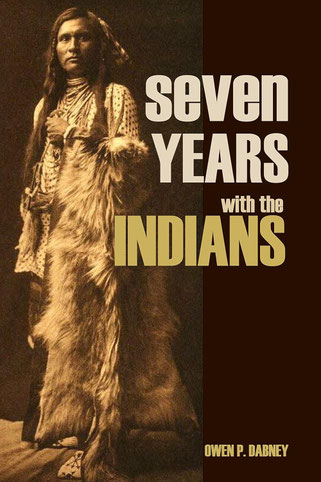
Entführt und gefunden – nette Familiengeschichte
Owen P. Dabney „Seven years with the Indians” 1897
Scroll down for English version
Es ist das einzige literarische Werk, das von diesem Autor bekannt ist, eine Erzählung, die auf eigenen Erfahrungen basiert, aber nichts anderes als eine Erzählung ist. Geschickt und nicht ohne Spannung aufgebaut, nur sehr milde rassistisch, was ungewöhnlich ist für die Entstehungszeit, und zum Schluss gibt es nach so vielen physischen Grenzerfahrungen auch ein Happy End, Friede Freude Eierkuchen für alle Beteiligten.
Wer allerdings erwartet hat, der Leser müsste doch etwas über das Alltagsleben der Nez Percé erfahren, von denen die kleine Lillian entführt wird, sieht sich enttäuscht. Sieben Jahre sind für ein Kind eine lange Zeit, in der es sich selbst und seine Lebensperspektive entscheidend verändern kann – aber nichts davon hier. Es geht nur darum, die traurige Geschichte von Lillians Entführung und die spannende ihrer Wiederauffindung zu erzählen, was mit hübschen, fast filmisch anschaulichen Szenenwechseln berichtet wird und in glücklicher Heimkehr endet.
Dabei kehrt nicht etwa nur die mittlerweile fast erwachsene Lillian nach Hause, sondern ebenso ihr Kinderfreund Mathew, der sie nach Monaten der Mühsal in der Wildnis von Yellowstone nein, eigentlich nicht gefunden hat… die beiden stoßen fast zufällig aufeinander, man fasst es ja kaum. Und endlich zuhause auf der Ranch ihrer beider Eltern in einem der lieblichen Täler, gesellt sich eine dritte Person hinzu – die wegen Lillians Flucht von ihrem Stamm ausgestoßene Häuptlingstochter Lewanna, die sich all die Jahre liebevoll um Lillian gekümmert hat. Sie ist inzwischen Christin geworden, na bitte, white supremacy, und hat eine kuschelige Zukunft als Ehefrau eines der Rancher.
Mit literarischem Talent erzählt, würden sich für diese Familiengeschichte üppige Illustrationen anbieten, die es leider nicht gibt – die detaillierte Beschreibung der zahlreichen Yellowstone-Naturschönheiten fordert das eigentlich heraus. So muss man sich die entsprechenden Bilder aus anderen Publikationen selbst zusammensuchen, wenn man denn möchte, und sich im Übrigen freuen an der differenzierten Charakterzeichnung der handelnden Personen und an dem doch recht einfühlsamen und freundlichen Umgang mit „Indianern“, deren Lebensraum freilich durch Goldgräber und Eisenbahnbau zunehmend bedroht wird. Das allerdings ist nicht mehr Thema des 84 Seiten schmalen Bändchens. Die Perspektive bedrohter Völker einzunehmen – es wäre 1897 denn doch zu weit gegangen für einen weißen Autor.
84 S., Copyright 2017 Big Byte Books printed in France, ISBN 9781520753881
27. Oktober 2024 Copyright Christel Heybrock
Abducted and Found – A Nice Family Story
Owen P. Dabney, *Seven Years with the Indians* (1897)
This is the only known literary work by this author—a narrative based on personal experience, yet strictly a story. It is skillfully constructed and suspenseful, with only mild racist undertones (unusual for the era), and—after so many grueling physical ordeals—it concludes with a happy ending: everything is sunshine and rainbows for all involved.
However, anyone expecting to learn about the daily life of the Nez Perce—the tribe that abducted young Lillian—will be disappointed. Seven years is a long time for a child, a period during which one’s self and outlook on life can change profoundly—yet none of that happens here. The focus is solely on recounting the sad tale of Lillian’s abduction and the thrilling story of her recovery; the narrative employs charming, almost cinematic scene shifts and culminates in a joyful homecoming.
It is not just Lillian—now nearly an adult—who returns home, but also her childhood friend Mathew. He didn't exactly *find* her after months of hardship in the Yellowstone wilderness—no, actually, he didn't... the two simply stumble upon each other almost by chance; it is truly hard to believe. Finally, back at their parents' ranch in one of those lovely valleys, a third person joins the group: Lewanna, a chief’s daughter who had been banished from her tribe for aiding Lillian’s escape and who had lovingly cared for the girl all those years. She has since become a Christian—naturally, *white supremacy*—and faces a cozy future as the wife of one of the ranchers.
Told with literary flair, this family story cries out for lavish illustrations—which, unfortunately, are missing, even though the detailed descriptions of Yellowstone’s many natural wonders practically invite them. Instead, readers must gather such images from other sources themselves—if they so choose—and otherwise simply appreciate the nuanced characterization and the genuinely empathetic, kindly portrayal of the Native Americans, whose homeland was, of course, increasingly threatened by gold prospectors and railway construction. That particular issue, however, lies beyond the scope of this slim, 84-page volume. Adopting the perspective of threatened peoples—well, that would have been a step too far for a white author in 1897.
84 pp., Copyright 2017 Big Byte Books, printed in France, ISBN 9781520753881
October 27, 2024 Copyright Christel Heybrock
Translation by Google